
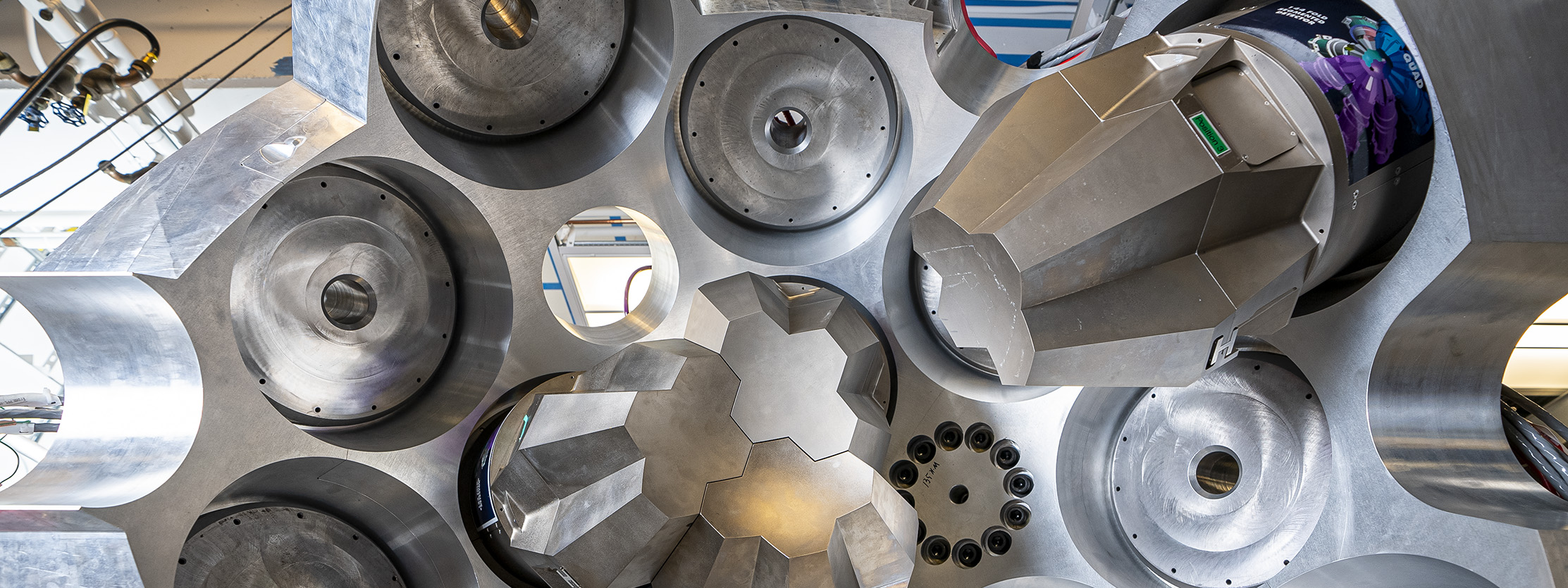
Detector Systems are key components of many of the science programs at Berkeley Lab. In disciplines ranging from nuclear science to biology, detectors enable experiments to produce data. In partnership with Berkeley Lab’s Physics, Nuclear Science, and Accelerator Technology and Applied Physics (ATAP) Divisions, and the Advanced Light Source (ALS), the Engineering Division designs, builds, and maintains detector systems.
Berkeley Lab Engineering develops large-scale systems for detectors at high-energy physics colliders and precision devices at light source beamlines. Combining expertise in the integration of large-scale systems with deep competencies in electronics and software development, the Engineering Division serves Berkeley Lab and the national and global scientific community by helping design and build state-of-the-art particle detectors.
Our success in this field relies on forming multidisciplinary teams with our scientific partner divisions, which are essential to developing cutting-edge and innovative detector systems from micro-scale to large-scale devices.
Custom Electronics Development
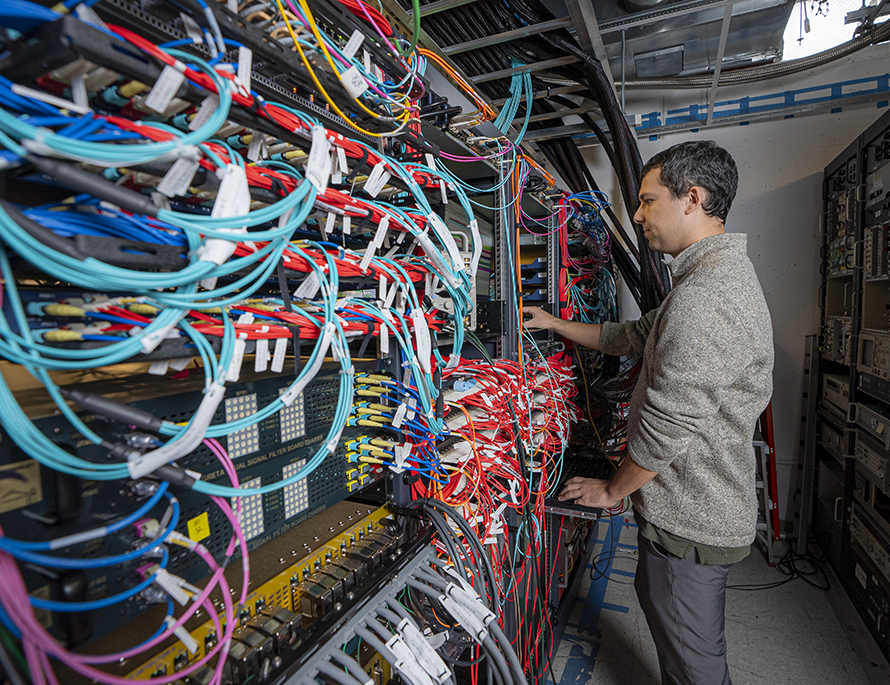
Berkeley Lab’s Engineering Division has extensive expertise in the electronics, software, and instrumentation for advanced detectors used in scientific research. As an example, Berkeley Lab is currently developing electronics for the DUNE Near Detector, a state-of-the-art neutrino detector to be built at Fermilab. Custom electronics for this detector, including the development of a cryogenic-compatible integrated circuit, won a 2022 R&D 100 Award for its ability to route data around damage.
Design for Extreme Environments
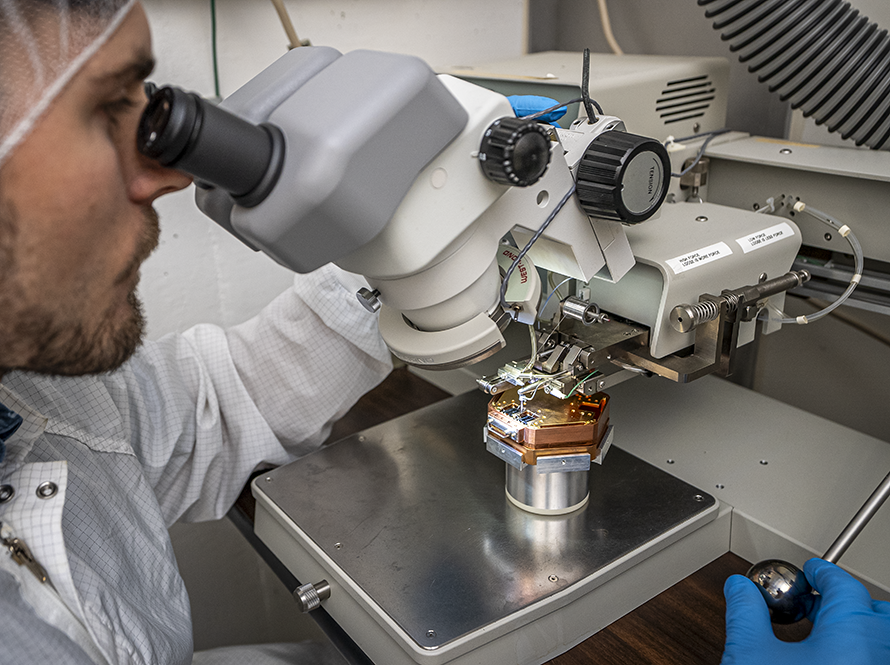
The Engineering Division’s Integrated Circuit (IC) Design Group develops integrated circuits for particle detectors and scientific imager readout, focusing on providing high-channel-count, mixed-signal chips for extreme environments (e.g., high-radiation, low-temperature, or in-vacuum operation) for which suitable commercial parts do not exist.
Large Detector Fabrication
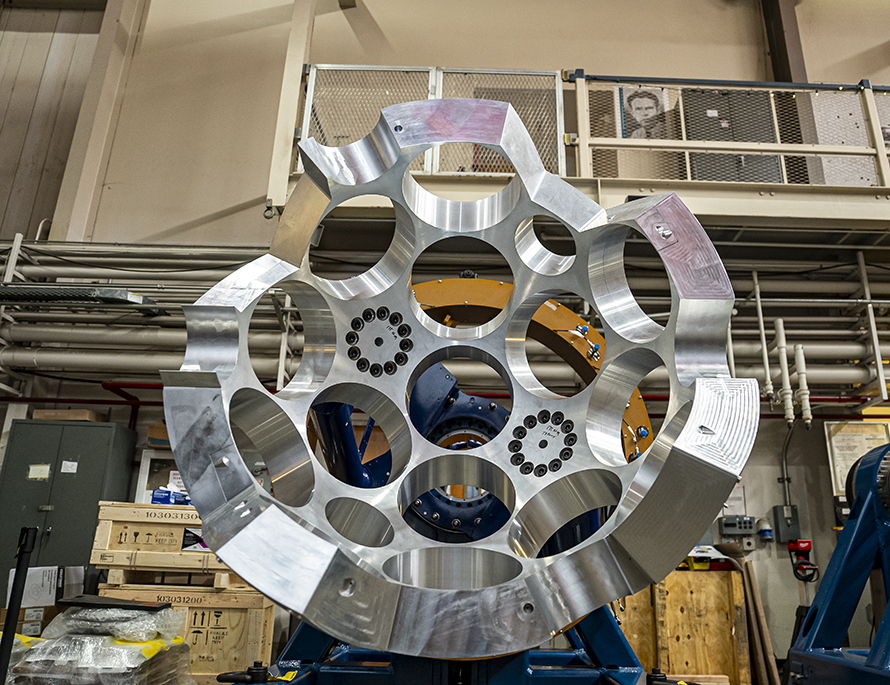
The Engineering Division has deep expertise in designing, fabricating, and installing large physics detectors and components. The team has worked on large composite cylinders, with extensive experience in advanced resins, high-modulus carbon fiber, and integrated cooling systems. The team was instrumental in building the ATLAS detector at CERN and is currently working on the upgrade for this instrument.
