
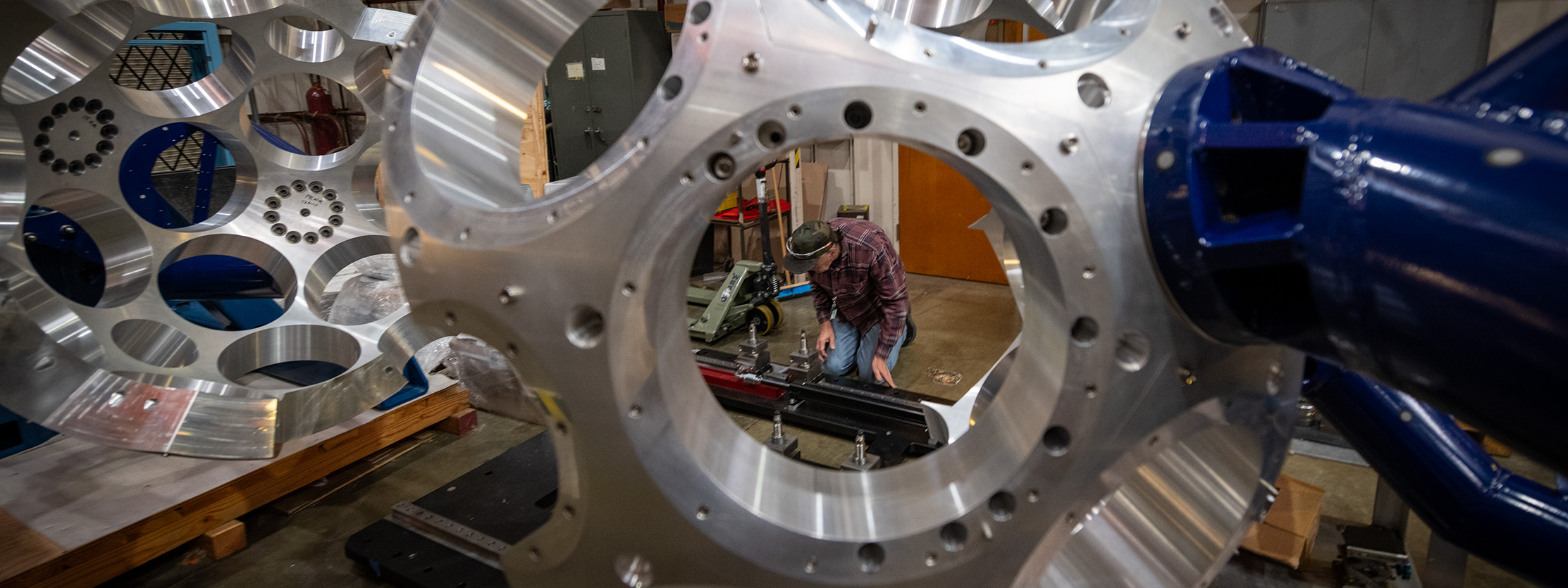
The Engineering Division supports scientific discovery through researching, designing, and building groundbreaking materials, instruments, and technology that help reveal new information about fundamental science questions. The Division’s extensive portfolio of projects shows the depth and scope of its technical capabilities and expertise.
Advanced Light Source-Upgrade (ALS-U)
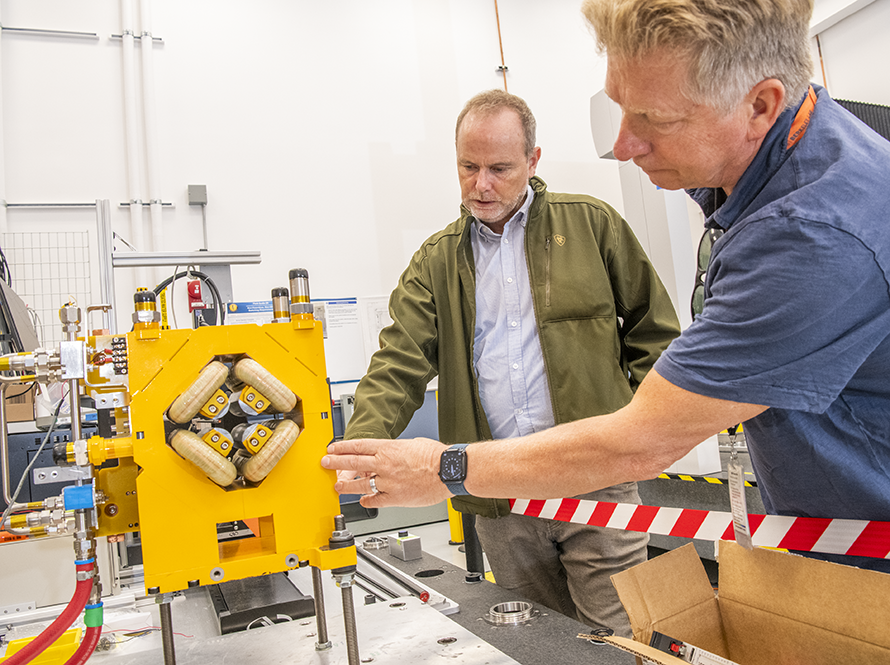
The Engineering Division is instrumental to ALS-U, an ongoing project that is working to upgrade the Advanced Light Source. ALS-U will endow the facility with powerful x-ray capabilities, enabling the production of highly focused beams of soft x-ray light that are at least 100 times brighter than those of the existing ALS. Support for this project includes providing core engineering and design work, fabrication and manufacturing, electrical and beamline engineering, and installation during shutdown periods.
High-Luminosity Large Hadron Collider Accelerator Upgrade Project (HL-LHC-AUP)
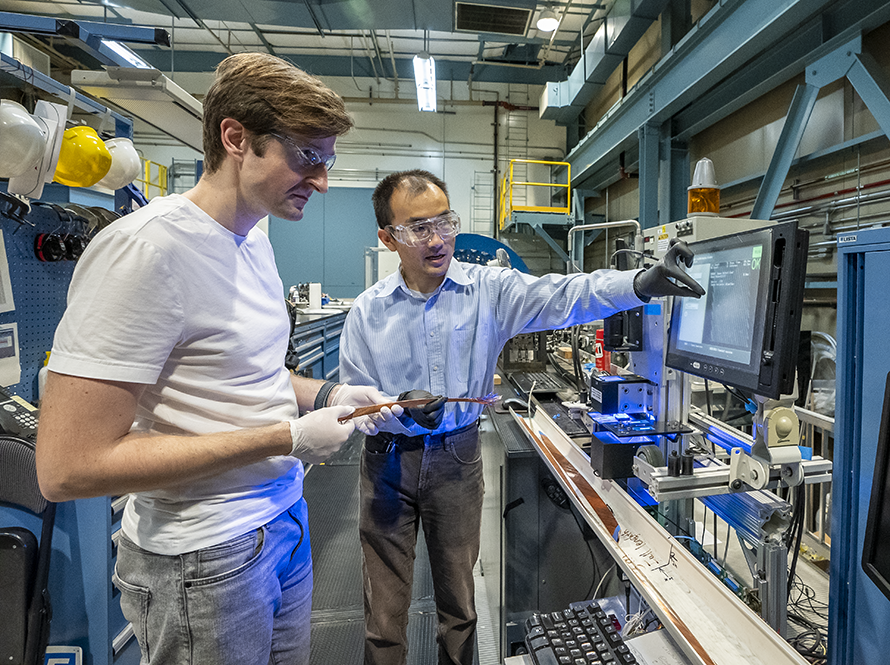
Engineering Division staff are playing a key role in building the powerful niobium-tin accelerator magnets for the HL-LHC AUP project, working in partnership with Fermilab and Brookhaven National Laboratory. These next-generation quadrupole magnets were originally pioneered by Berkeley Lab’s Superconducting Magnet Program with support from the Engineering Division. The niobium-tin magnets will focus the accelerator beams as they travel to the interaction point, significantly enhancing the performance of the HL-LHC.
High-Luminosity Large Hadron Collider ATLAS
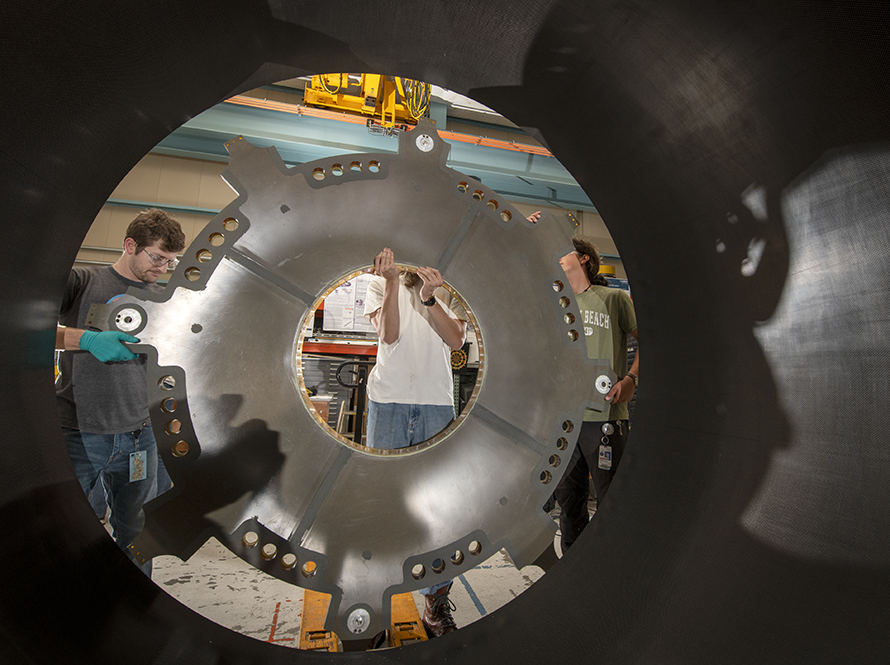
CERN’s ATLAS detector, the largest detector ever constructed for a particle collider, has been undergoing a multi-year upgrade to overhaul its innermost tracking system. The Engineering Division team has been a key partner in this project, providing the expertise driving the detector’s planning, design, fabrication, assembly, qualification, and installation. The Division is also responsible for designing and managing the assembly processes and all of the safety documentation.
Deep Underground Neutrino Experiment (DUNE)
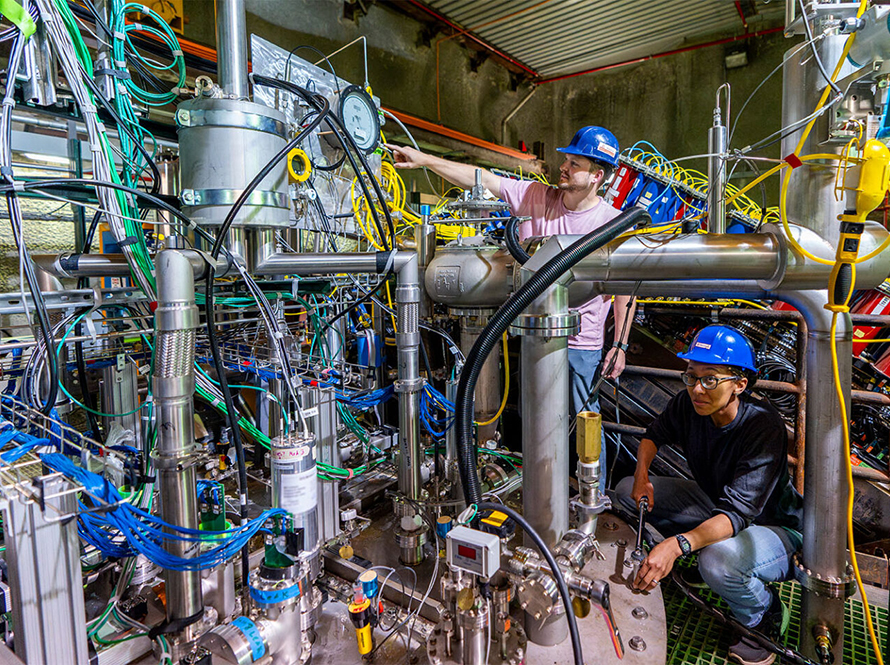
DUNE is a leading-edge international experiment for neutrino science and proton decay studies. At the heart of DUNE’s detector is LArPix, an innovative end-to-end pixelated sensor and electronics system capable of imaging neutrino events in true-3D. LArPix was designed and built by a team of Berkeley Lab engineers and physicists. When the instrument begins taking data, it will enable scientists to explore new areas of neutrino research and possibly address some of the biggest physics mysteries in the universe, including searching for the origin of matter and learning more about supernovae and black hole formation.
LuSEE-Night
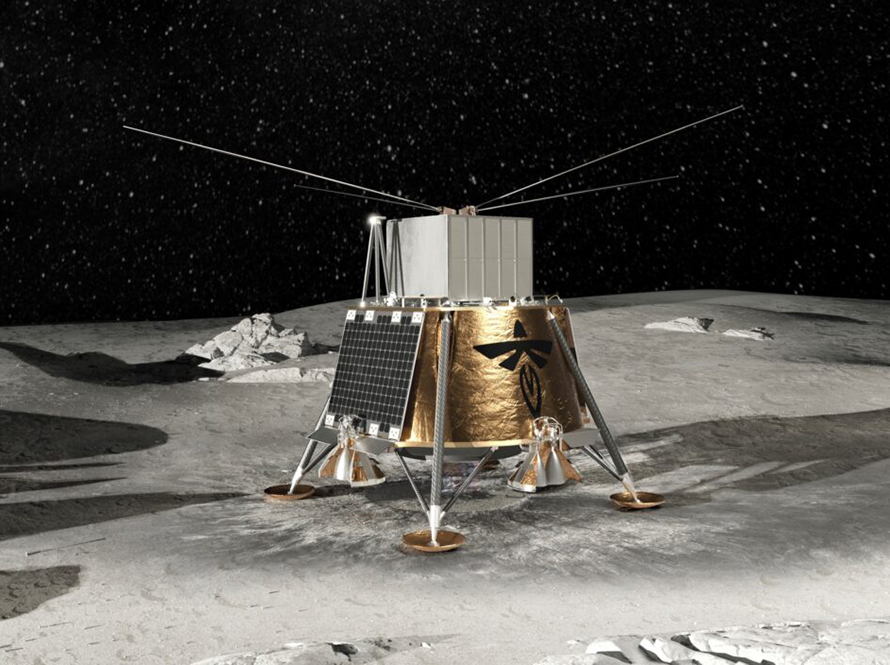
LuSEE-Night is a radio telescope designed to investigate the feasibility of low-frequency radio astronomy from the far side of the moon. The Engineering Division has contributed engineering support to the telescope hardware, including the carousel, an integral piece that will rotate the apparatus. The project is a collaboration between NASA through the Space Science Laboratory in Berkeley and the Department of Energy through Brookhaven National Laboratory and Lawrence Berkeley National Laboratory.
Electron-Ion Collider (EIC)
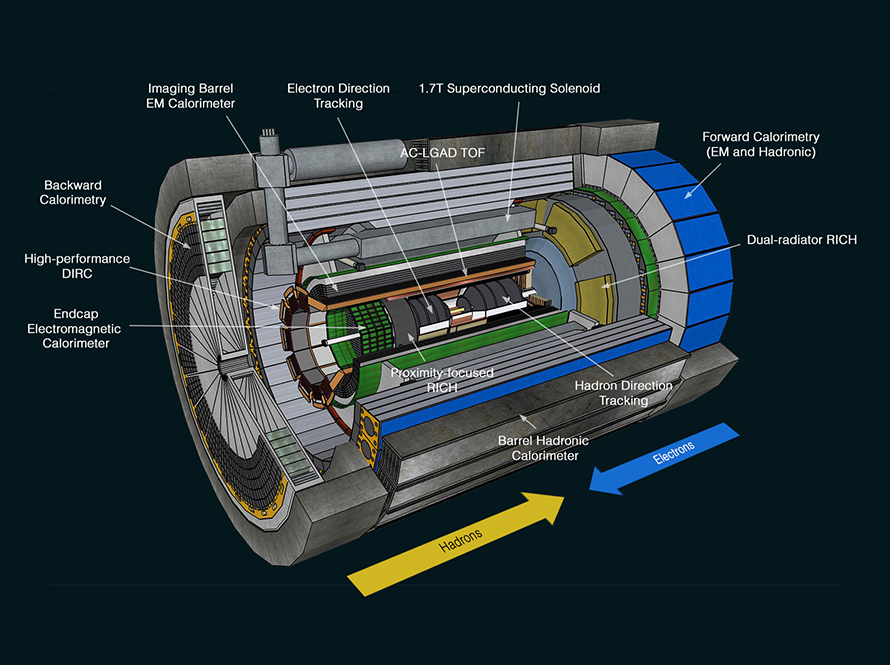
EIC is a planned particle accelerator that will peek inside the nucleus of atoms to provide a more complete understanding of the internal structure of these fundamental building blocks. The Engineering Division, along with our partners in the Physics Division, have been instrumental in planning and development for this new instrument.
MARS-D
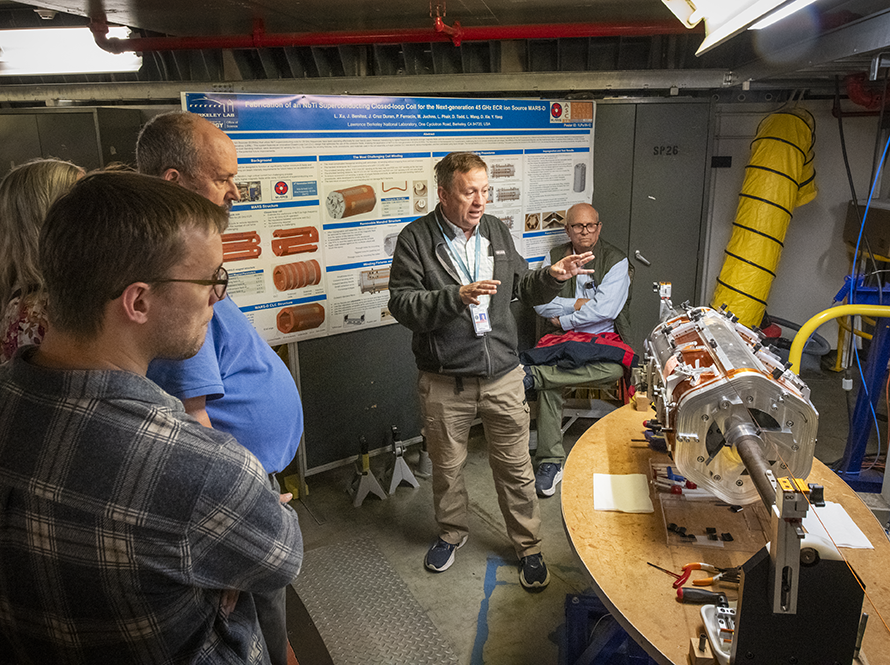
The Engineering Division is helping to fabricate coldmass sextupole and solenoid magnets for the MARS-D project, which will produce a fourth generation Electron Cyclotron Resonance Ion Source (ECRIS).
Linac Coherent Light Source II (LCLS-II) SXR HE
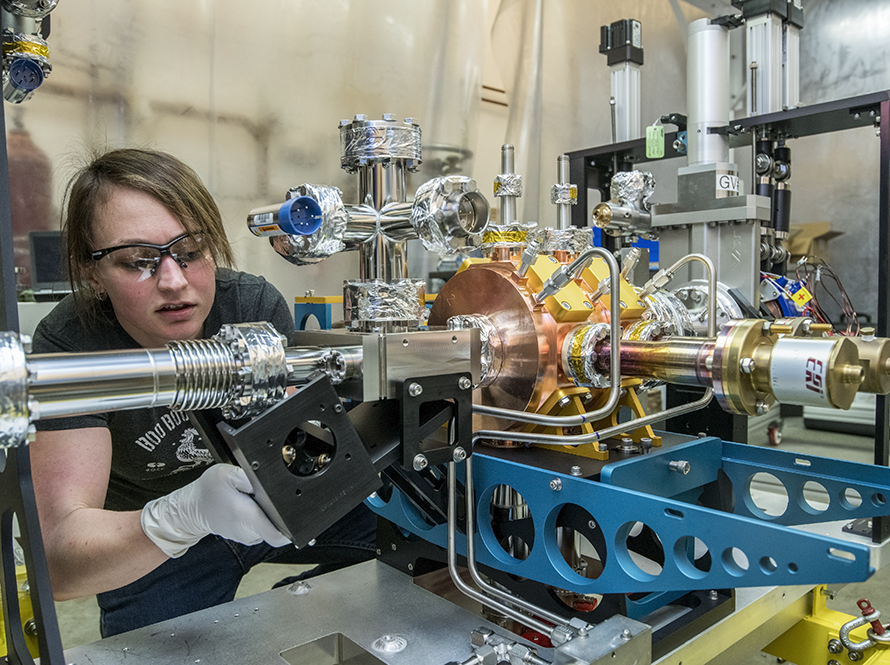
LCLS-II is the upgrade of the Linac Coherent Light Source (LCLS) national user facility at SLAC. LCLS is a powerful X-ray laser that enables exploration of atomic motion and changes in chemical bonds. Berkeley Lab is leading the design and production of the injectors and undulators for the facility upgrade. Engineers created nine new undulators and retrofitted 21 existing undulators in support of this effort. The upgrade added two new X-ray laser beams and expanded the capacity for more instruments and research experiments.
TESSERACT
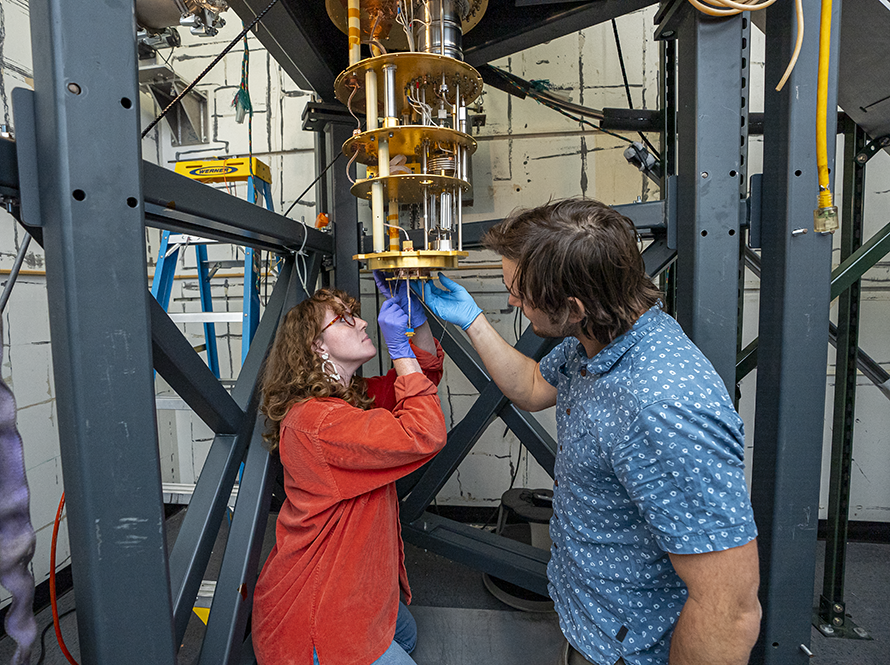
The TESSERACT experiment will use extremely sensitive detectors to understand a little-explored category of dark matter—low mass dark matter. The Engineering Division is supporting the project with shielding and cryostat design, as well as systems engineering.
Spec-S5
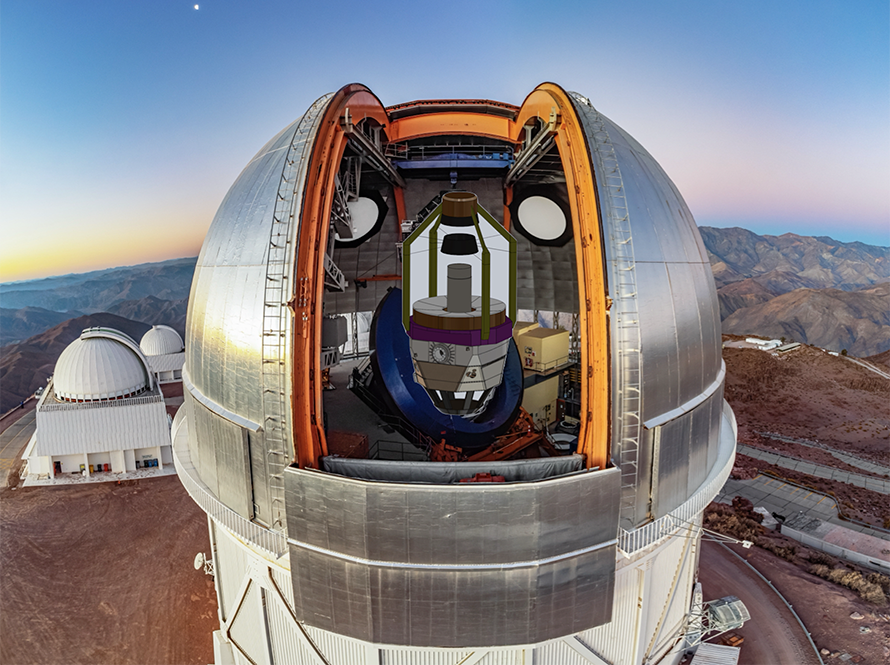
Spec-S5 is the next-generation spectroscopic survey of the universe, a follow on from the DESI project. The Division is providing fundamental engineering and design support for this project. When it comes online, Spec-S5 will map more linear modes than DESI and Rubin combined, providing a detailed map that will increase our understanding of the physics at work in the early universe.
LUX-ZEPLIN (LZ)
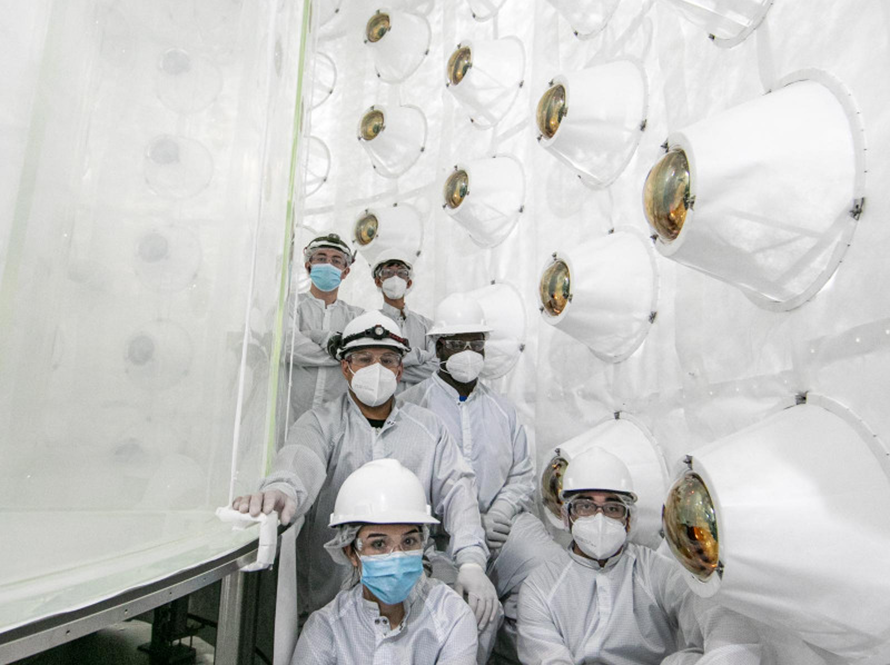
Berkeley Lab is the lead institution for LZ, a next-generation dark matter experiment. LZ uses a two-phase time projection chamber containing seven active tonnes of liquid xenon to search for dark matter particles. The Engineering Division has supported the project with prototyping and testing, design, and manufacturing and installation.
Dark Energy Spectroscopic Instrument (DESI)
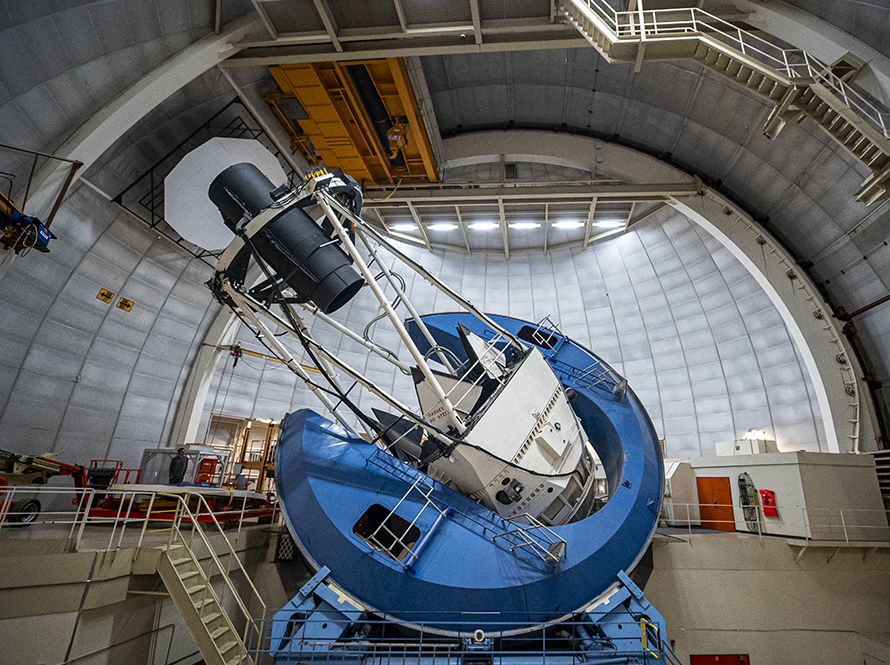
DESI is an optical spectrograph used to measure the effect of dark energy on the expansion of the universe. The Engineering Division led the design, fabrication, and assembly of the instrument, which consists of 5,000 fiber-positioning robots installed in a circular configuration on the 4-meter Mayall telescope. The robots, created by Berkeley Lab engineers, are able to position optical fibers to the desired location on the focal plane with a 5 µm accuracy.
COSMIC Scattering Endstation
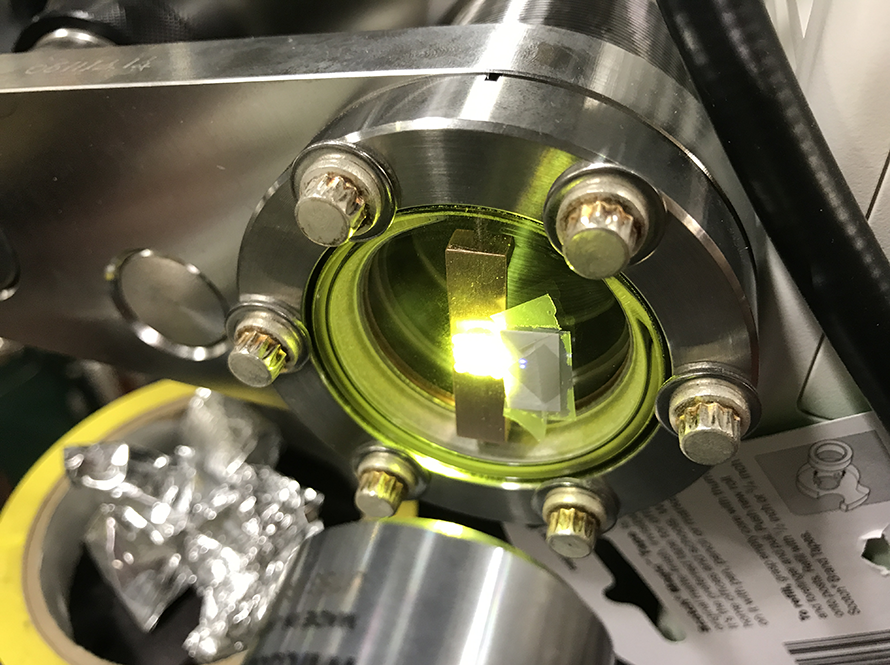
The COSMIC Scattering Endstation focuses on understanding the nanoscale organization of complex materials using coherent soft X-ray scattering techniques. It is installed at one of two branches on the Coherent Scattering and Diffraction Microscopy (COSMIC) beamline and achieved first light in 2017.
Gamma-Ray Energy Tracking Array (GRETA)
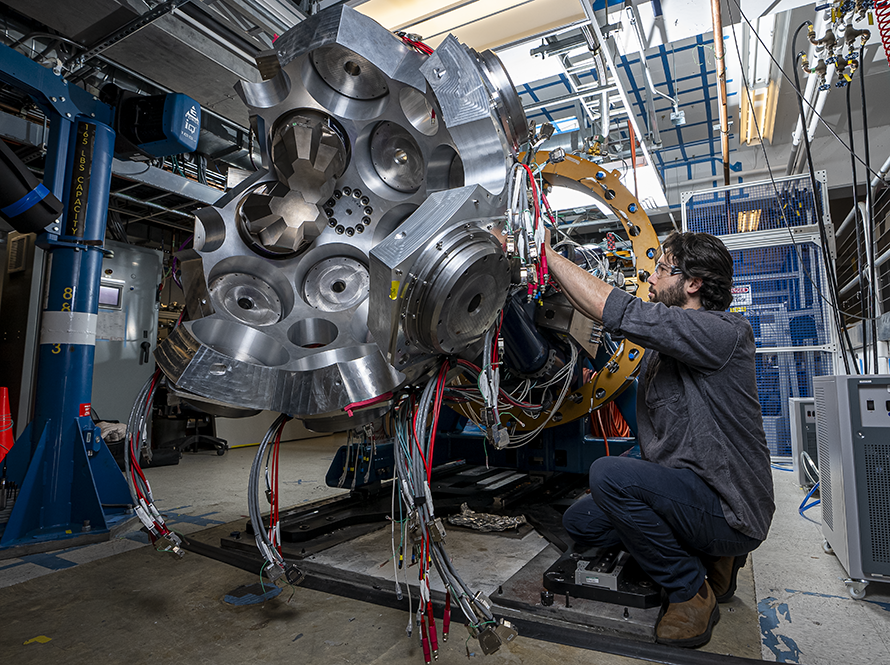
Berkeley Lab Engineering has a long history of designing and building large-scale detector arrays, with deep experience and institutional knowledge of the electronics and mechanical design of these instruments. Engineering has been instrumental in every step of building GRETA, from design and manufacturing to testing, survey, and alignment. Further, the Engineering Division has supported not only the detector but also all of the infrastructure associated with the detector, including electronics, cooling, and computing systems.
