
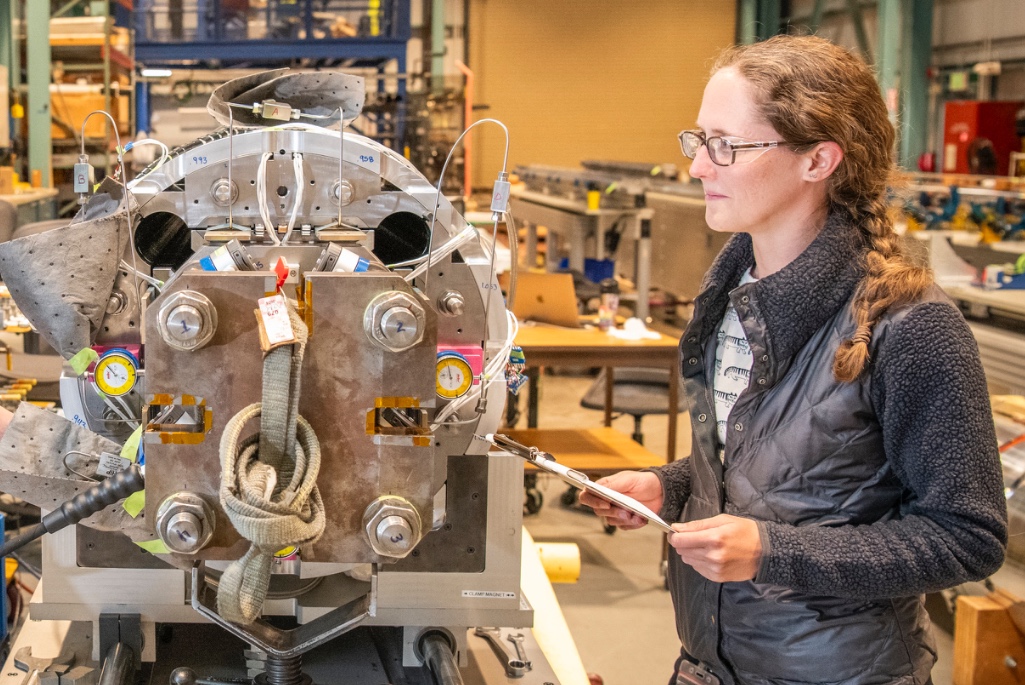
Mechanical engineer Jennifer Doyle celebrated her 15-year anniversary at the Lab on Valentine’s Day of this year. She joined the Engineering Division as a newly minted engineer fresh out of college and, finding a steady stream of new challenges and learning opportunities, has made her career at Berkeley Lab ever since. Doyle considers herself a mechanical engineering generalist, providing engineering support on design, analysis, calculations, quality assurance, and measurement. She draws on her interest in art to bring creativity to her role as an engineer. During her time at the Lab, she has worked on high-profile projects, including the High-Luminosity Large Hadron Collider Accelerator Upgrade Project (HL-LHC AUP) and the Gamma-Ray Energy Tracking Array (GRETA), and is currently supporting the ALS-U magnet production team.
EG Division:
What does your day-to-day look like at the Lab?
Jennifer Doyle:
It’s varied, depending on the project. I recently transitioned to ALS-U. I’m in the magnet measurement facility that we have set up for ALS-U. I’m tasked with managing the flow of over 400 magnets that are going to be arriving at the Lab that need to be measured and have a variety of acceptance tasks performed before they get installed at the ALS. I’m in charge of figuring out which measurement stations, which tasks, which order, and which personnel are handling that work on a day-to-day basis, which is new to me. It’s a job with more leadership and responsibility than I’ve had in the past.
EG Division:
What’s something that might surprise people to know about your work at the Lab?
Jennifer Doyle:
When I’m talking to people outside of the Lab, they have a certain image of what that’s like—which is a pretty cool image! But I think people have the impression that a lot of your day is doing calculations in a room by yourself. People are always surprised to hear how much of being here is team science. There’s a lot of teamwork and a lot of collaboration that’s required to achieve success in these really large-scale, challenging projects that we do. And also, how much communication is part of the job. There’s a lot of writing, a lot of speaking, a lot of communicating ideas, and plans, and designs with other people who are coming in with either similar or very different backgrounds, and expertise, and knowledge areas.
EG Division:
What is it like working in these large, multi-disciplinary groups?
Jennifer Doyle:
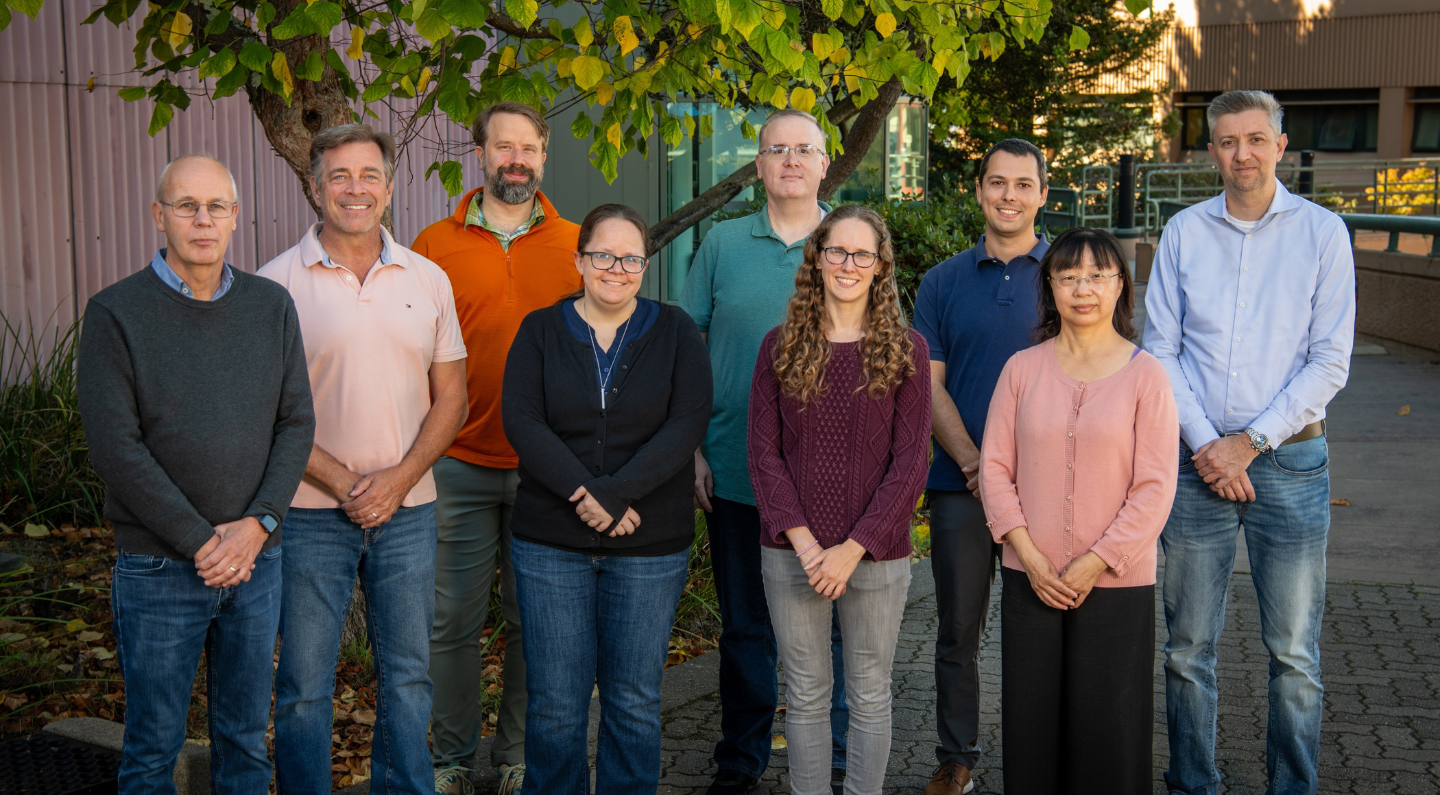
I think it’s really great. On these large-scale, very technical projects, you’re drawing in experts from a lot of different areas. So, you have these scientists who are just brilliant, and then engineers who just have a wealth of design knowledge, and machinists, and fabricators, and technicians who have built wild and crazy things. There’s always just so much to learn from other people. A really prominent thing here seems to be that everybody really wants to share what they know. Everyone is eager to impart their knowledge. So, it’s just a really great learning environment.
EG Division:
What’s the most challenging part of your job?
Jennifer Doyle:
A lot of the design work we do here is quite challenging because we’re working on cutting-edge projects—things that have never been designed or built before. It may have very tight technical scientific requirements. You might be designing a component that has very tight constraints for structural performance or thermal performance, or something like that. But inevitably, it also has to fit in a very small footprint or space envelope, and still has to be able to be fabricated, assembled, and installed. It can make it very, very challenging to try to come up with a design that both meets its functional requirements and also fits in the space that’s allocated for it, and also is able to actually be made.
EG Division:
What do you like most about your job?
Jennifer Doyle:
The ability I’ve had to learn new things. I like that I haven’t been restricted to a narrow set of tasks, and that I’ve had a lot of new areas of work, and that I was given the opportunity to learn along the way. I really credit the various project leads that I’ve had who gave me that space to learn those tasks. I love learning new things that I don’t have any experience in. So, the Lab’s been really great at providing those opportunities.
EG Division:
What is your proudest accomplishment at the Lab?
Jennifer Doyle:
On a professional level, the most exciting moments are when we complete a project and we either see it installed here on site or, if it’s a project for a different location, seeing it shipped out. For example, for the High-Luminosity Large Hadron Collider Accelerator Upgrade Project, we had our last magnet ship out in January, and seeing the truck loaded up and driving off is just really exciting. It’s not just personal pride, it’s team pride.
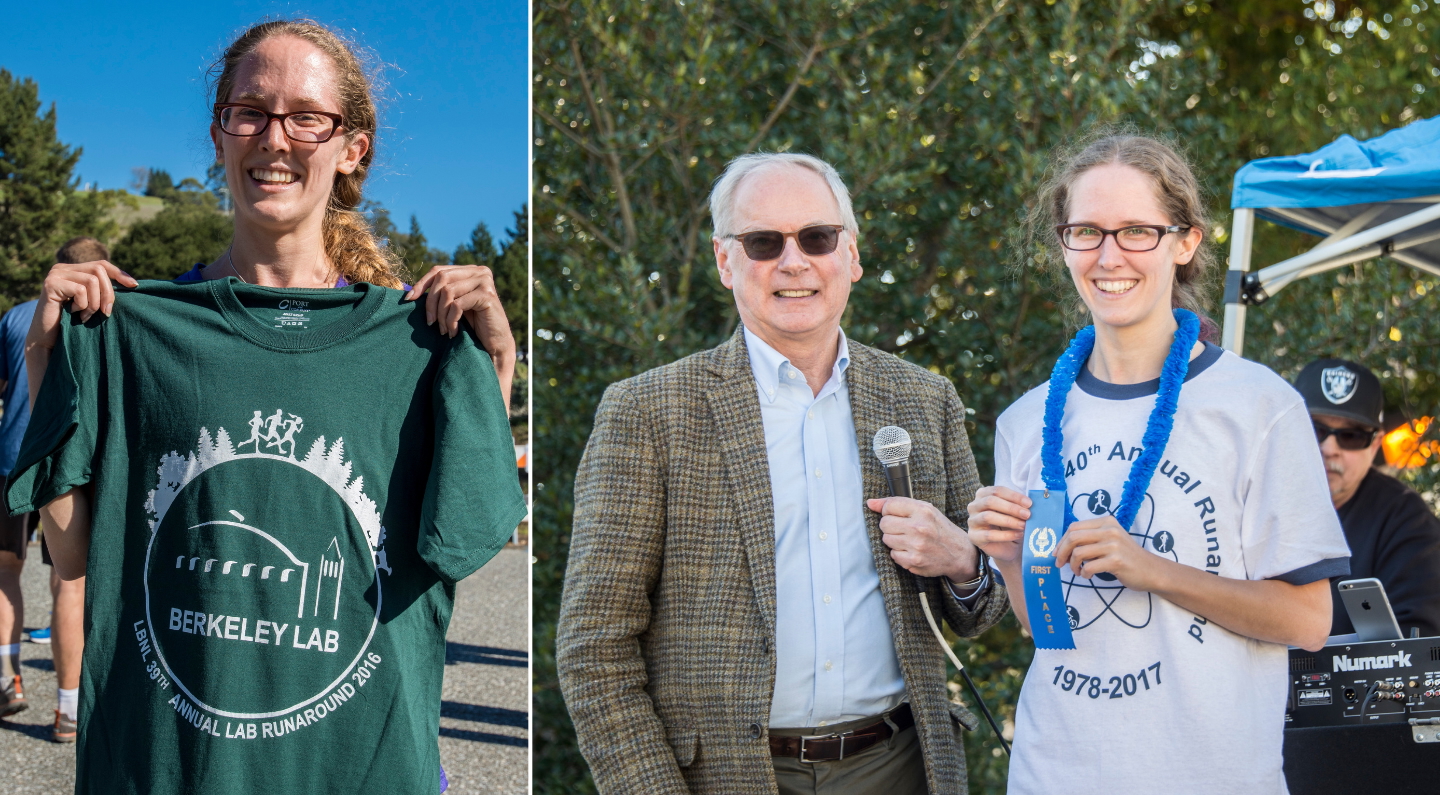
For a non-scientific accomplishment at the Lab, I’m a seven-time Run Around female winner. I have not won since 2019, but I had a good run there for a while.
EG Division:
What did you want to be when you grew up, and what was your pathway to get to where you are now?
Jennifer Doyle:
I wanted to be an artist, actually. I did not like science. Or I said I didn’t like science, but the real thing was that I was more scared of science. I figured that I was going to do ceramics, or glassblowing, or something like that.
I went to Oakland Tech for high school, and they have an engineering program there. It was, by and large, manual drafting—a little bit of 3D CAD—but a lot of drafting, and doing technical drawings by hand. And every year, each student would make these very elaborate technical drawings–big, large, in color. I remember the first time I visited that room, and I saw all these projects on the wall. I thought, oh that’s not engineering, that’s art. And so, I really took to that.
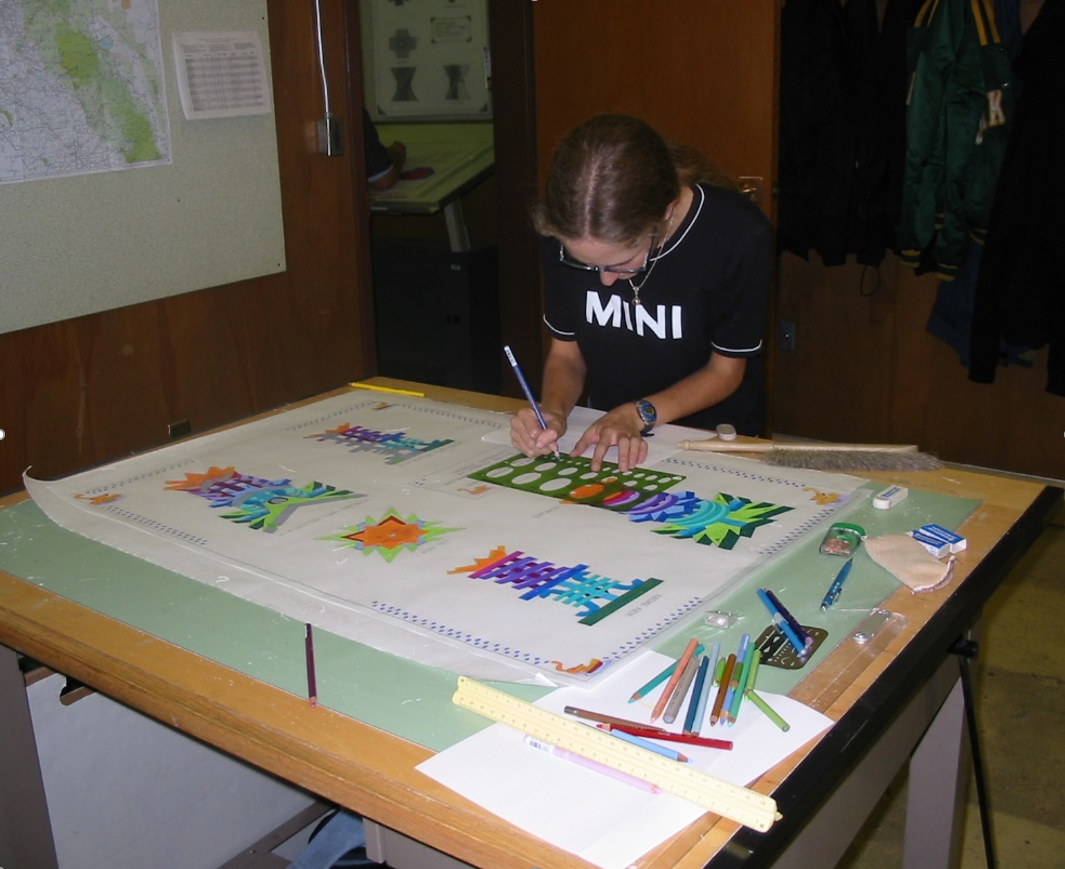
Jennifer Doyle working at a technical drawing at Oakland Tech in 2003. (Credit: Jennifer Doyle, Berkeley Lab)
I was starting to have a science conversion at that point. I had a really influential science teacher in middle school. She was the first science teacher I had who really did experiments in class and things like that. I really looked up to her, so I stopped being scared of science and was kind of into it.
But doing that engineering program in high school, I realized that the reason why I like art is because I like to make things. And if I do engineering, then I can make things for science. I went to college for engineering for that reason. I got my job here because I like to make things for science.
EG Division:
Do you have a piece of career advice that you could share?
Jennifer Doyle:
I think it’s just always being open to learning new things and trying things, trying tasks that are not in your area of expertise, and being willing to take on things where you’re thinking, “I don’t know anything about this, but I want to learn more.”
