News

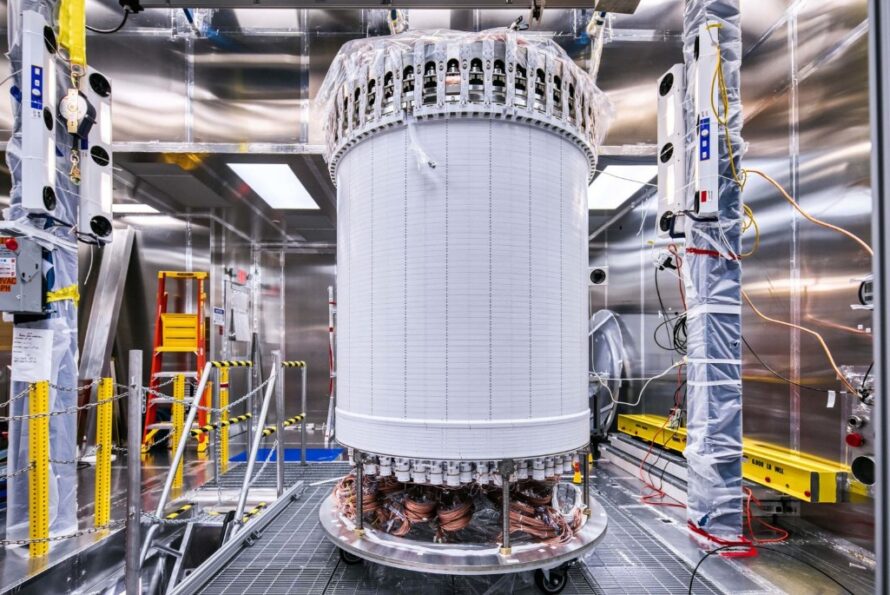
Super Cold and Super Tiny: the Electronics Behind the LEGEND-1000 Physics Detector

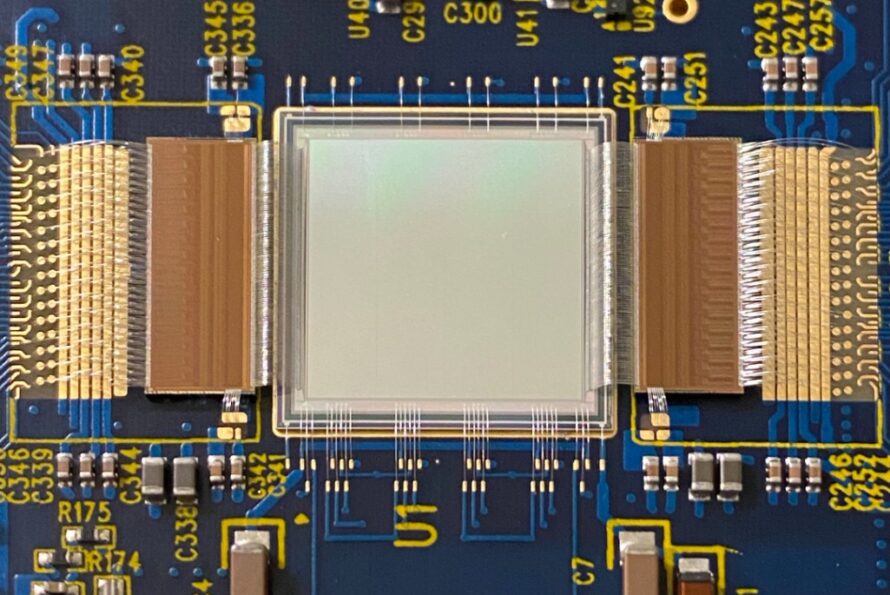
Magnified view of a rectangular microchip with fine wires bonded around its edges for electrical connections.

Made in Berkeley Lab: Reverse-Engineering Discontinued Parts

A close up of four brand-new powder-coated chiller end bells sit on a black background.

Berkeley Lab’s Engineering Division Unveils Its New Computer Numerical Control Machine

Discovery to Delivery: 3Q4 with Senajith “Seno” Rekawa

Seno Rekawa shown with highlighted quote: "Scientists come to me with novel research ideas and expect me to build instruments that no one else in the world has built. These can range from an ultra-high-precision extreme ultraviolet lithography system to a simple optical metrology tool for advanced microelectronic research."

Using AI to Stabilize High-Power Lasers for Laser-Plasma Accelerators

Final Magnet for the LHC's High-Luminosity Upgrade Leaves Berkeley Lab

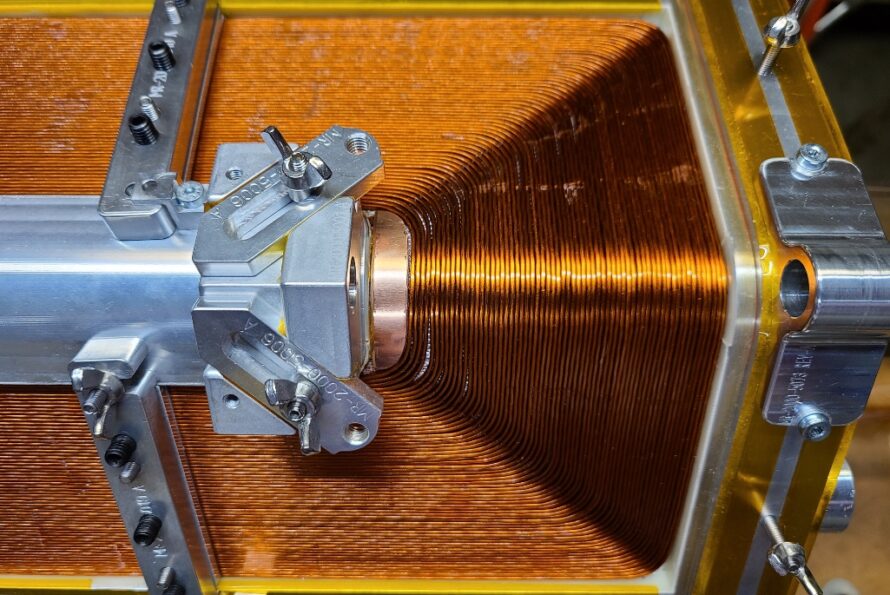
Made in Berkeley Lab: elegant arcs for superconducting magnets

A computer numerical control (CNC) machine in Berkeley Lab Engineering’s Building 77 traces the intricate groove pattern for a superconducting cable into an aluminum-bronze mandrel.

Engineering Division pilots equipment protection interlock system for Berkeley Lab user endstations

Ernesto Paiser, ALS Instrument Software Support Group Lead, pictured with the new no-code interlock system.

Expert Interview: Soren Prestemon on Magnet Technology

Soren Prestemon looks over the winding tooling design used for the Electron Cyclotron Resonance sextupole magnets.

New small-batch chemical reactor design provides a springboard for science

Mechanical Engineer Nick Wenner, a member of the Engineering Small Project Support (EsPS) team, demonstrates the method for sealing each well in the small high-throughput pressure reactor he designed and built for use in specialized experiments.

Made in Berkeley Lab: the plasma chamber at the heart of heavy ion accelerators

A closeup view of the flange for the third-generation VENUS plasma chamber. The device was made in-house by the Engineering Division’s highly skilled technicians.

Senajith “Seno” Rekawa awarded ASPE 2025 Distinguished Service Award

Berkeley Lab Engineer Senajith “Seno” Rekawa (right) accepts the American Society of Precision Engineering (ASPE) 2025 Distinguished Service Award from Stuart Smith, Professor and President of ASPE, at a ceremony held on November 6 in San Diego, California.