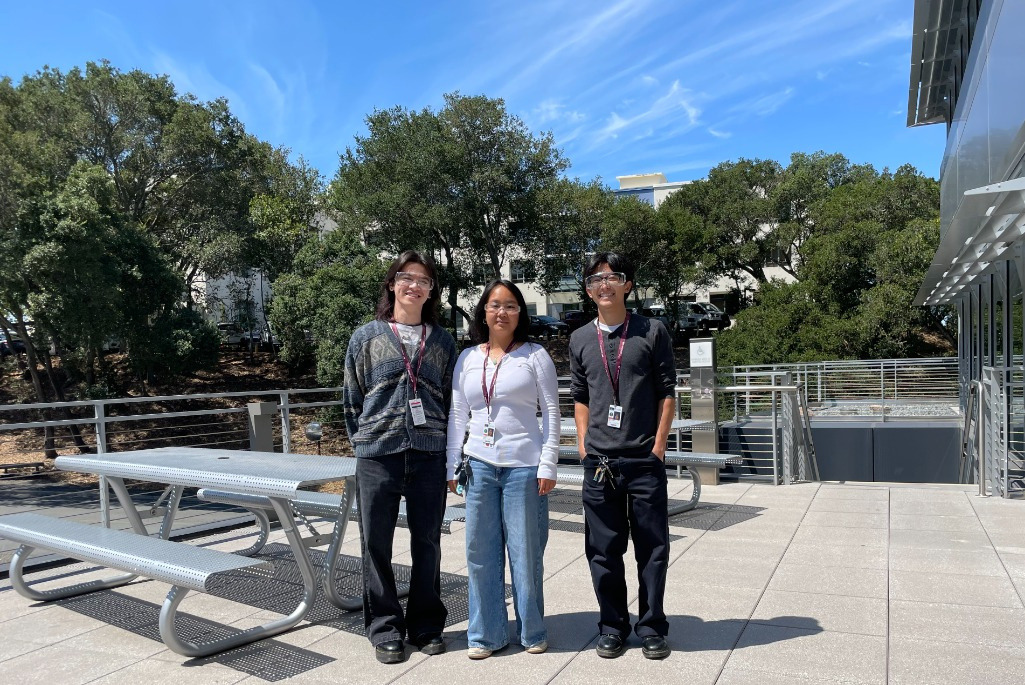
Who makes up the future of scientific innovation and engineering research? This summer, Berkeley Lab’s Engineering Division hosted over a dozen student assistants. These student assistants, ranging from undergraduate to master’s students, are involved in cutting-edge science and gaining experience at the forefront of engineering research. Below, some of our student assistants explain their academic interests, their varying responsibilities at the Lab, and what they hope to experience and achieve during their time within the Engineering Division.
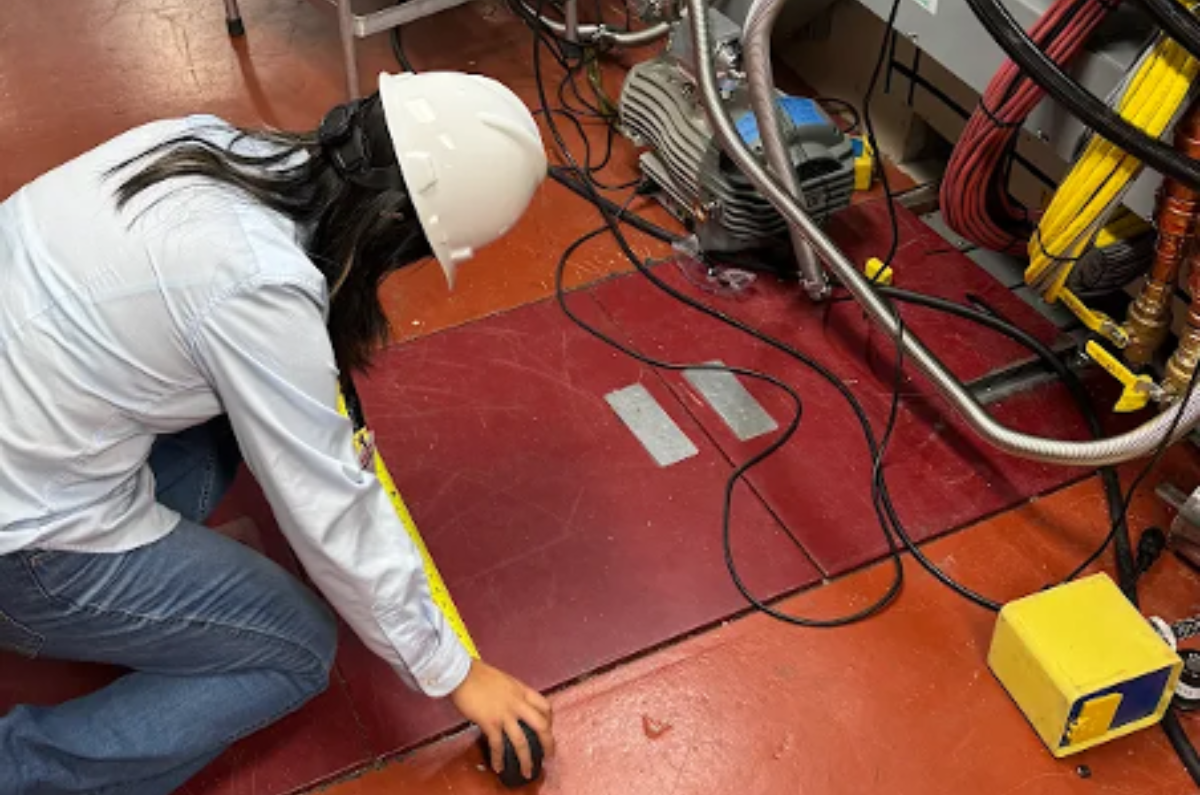
Hannah Zheng, Engineering Division Student Assistant, Engineering Division
Zheng is studying mechanical engineering with a concentration in medical devices. She says the field of mechanical engineering excites her “because it’s so broad; you can do anything from aerospace or bio or working on hardware for tech.”
Zheng is working on the Lab’s Advanced Light Source Upgrade (ALS-U) project, mainly on computer aided design (CAD) with 3D models. One of her projects involves updating floor plans to be converted into different software so that contractors can see those changes. She is also working on a project that links the CAD models to a scheduled timeline, creating an animated sequence that allows users to watch the updates of the model day-by-day. Zheng says what she looks forward to most during her time at the Lab is seeing this current project come together as a finished product.
“I chose to work in Berkeley Lab’s Engineering Division because you’re working at the forefront of new tech or new sciences, and contributing to the future of research,” says Zheng.
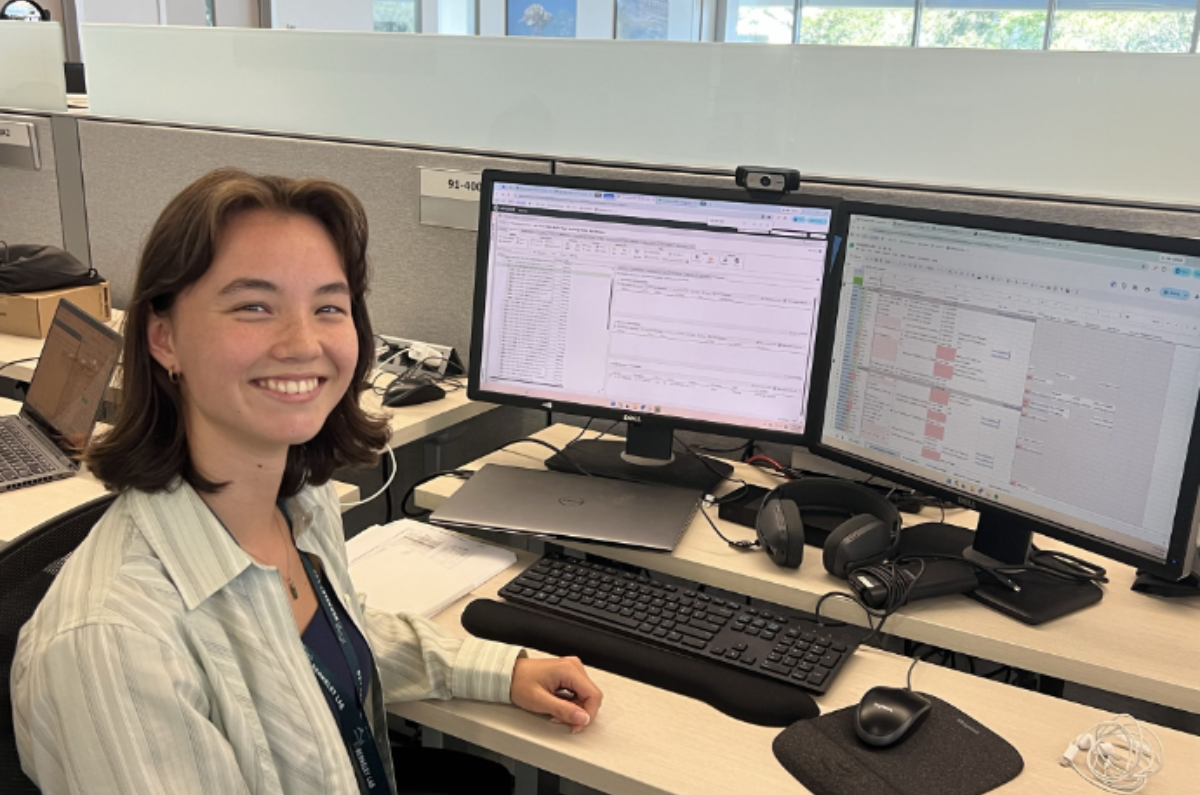
Maya Dughi, Engineering Division Student Assistant, Engineering Division
Dughi is a second year mechanical engineering student, considering specialization in energy and materials. The broadness of mechanical engineering, and the ability to focus on different topics throughout the subject is what excites Dughi about her field: “I don’t feel like I’m constrained by what I’m studying, it opens more doors than it closes.”
One of Dughi’s main responsibilities is the Engineering Process Guide, a communication guide that helps define engineering practices and makes it easier for engineers to procure items. Dughi is also working on documentation for data center racks for the ALS-U—consolidating information on how the racks were built, or what they were built with—to create an organizational tool to aid in future rack repair.
“What’s cool about the lab is there’s so much going on, things I’m not necessarily involved in, but I still get to see tours and talks,” says Dughi. “I went to a Nobel prize-winning talk, and I was like, wow, that just happened!”
Dughi looks forward to simply learning more—whether from hands-on experience or from knowledgeable engineers—during her time in the Engineering Division.
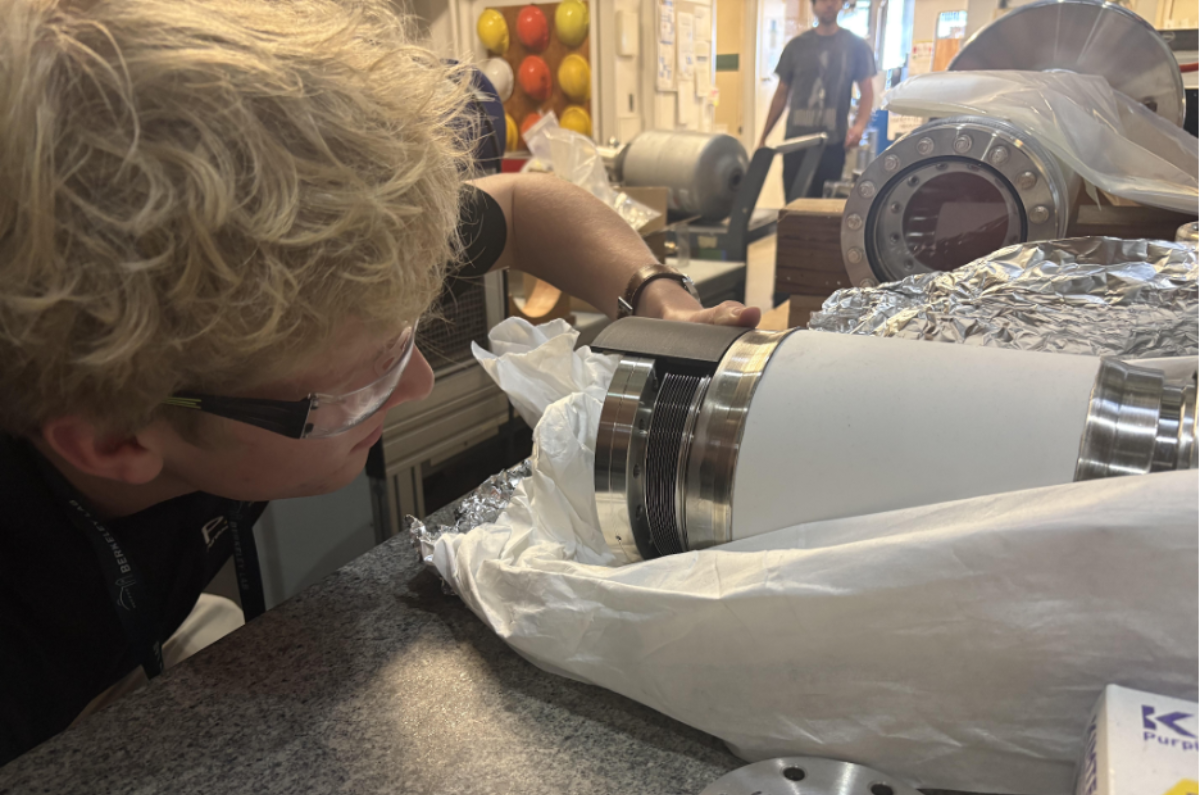
Brandon Osborn, Engineering Division Student Assistant, Engineering Division
Osborn is a sophomore studying mechanical engineering at Purdue University. Ever since he was a kid, Osborn loved tinkering with items around him.
“The logical next step to pursue my passion was to enroll in engineering and gain those necessary skills you need to become a mechanical engineer,” Osborn explains.
Osborn is a mechanical engineering intern within the Engineering Division at Berkeley Lab and designs components for the 88-Inch Cyclotron.
Osborn is currently working on a beam steer structure—a structure that allows four perfectly distanced copper coils to be shifted with six degrees of freedom. Once powered, the structure produces a magnetic field that steers a particle in a desired direction. The beam steer will allow researchers to test different integrated water cooling systems for the Mixed Axial and Radial field System Demonstrator Ion Source.
One of the aspects of the Engineering Division that surprised Osborn the most was the tight knit collaboration between the engineering and manufacturing sides of production.
“I design a component and create an engineering drawing,” Osborn says, “and that same day I can walk downstairs, talk to the manufacturing technicians, ask for feedback, and walk back up to my computer to make those changes.”
During his continuing time at the Lab, Osborn hopes to take his projects end to end and see his designs fully implemented.
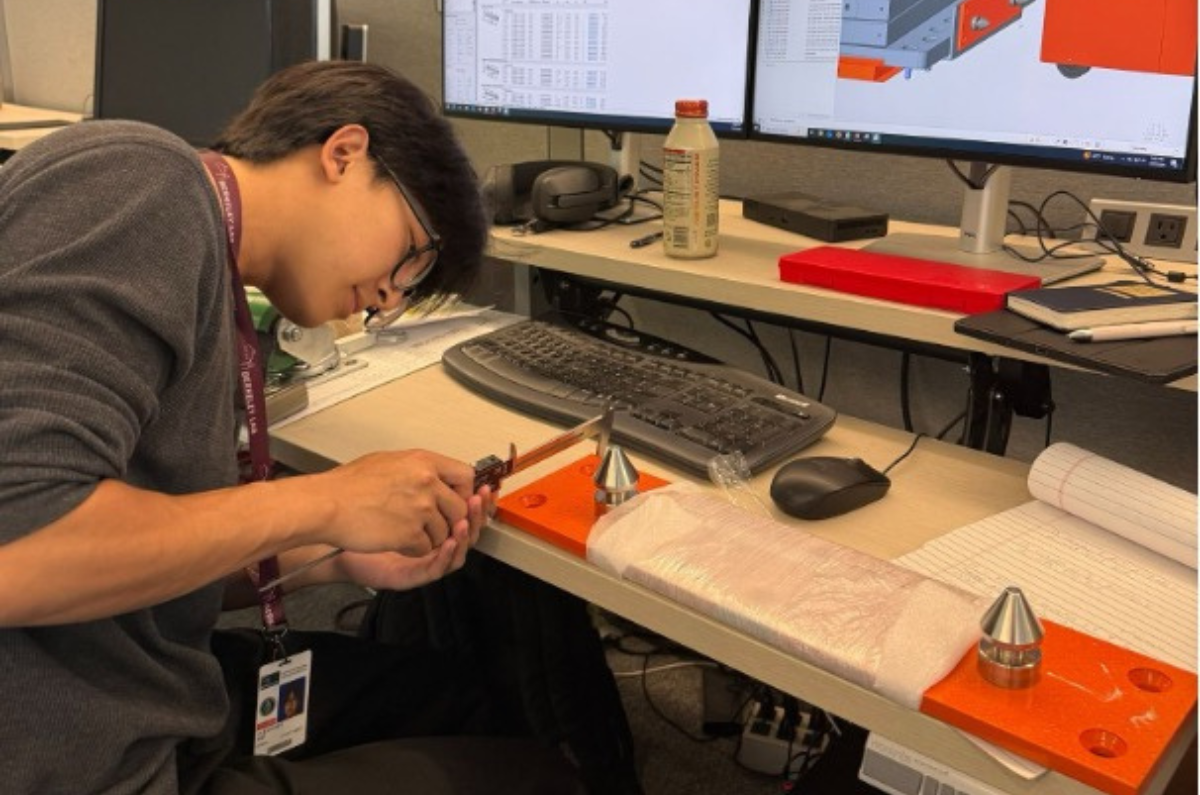
Alex Kim, Engineering Division Student Assistant, Engineering Division
Kim is a senior studying mechanical engineering at San Jose State University, and has interned at the Lab for the past year. Kim currently works under the removal and installation team in the manufacturing engineering department, and is assisting with the Advanced Light Source Upgrade project.
Kim’s most recent project involves using a new program called Navisworks, a 4D scheduling tool.
“We have our project schedule timeline, but we want to actually visualize it, so the program connects the computer aided design model of the entire ALS with our schedule,” explains Kim. “A feature in the CAD model will be scheduled for removal on a certain date, and on that date the feature will get removed or animated to remove, so you can actually see a visualization of the project as it goes on.”
Kim hopes to continue learning new programs and other engineering topics during his time in the Engineering Division. He also intends to revisit a project surrounding designing, prototyping, and creating engineering drawings and CAD models for a tool for moving, removing, and installing electrical racks.
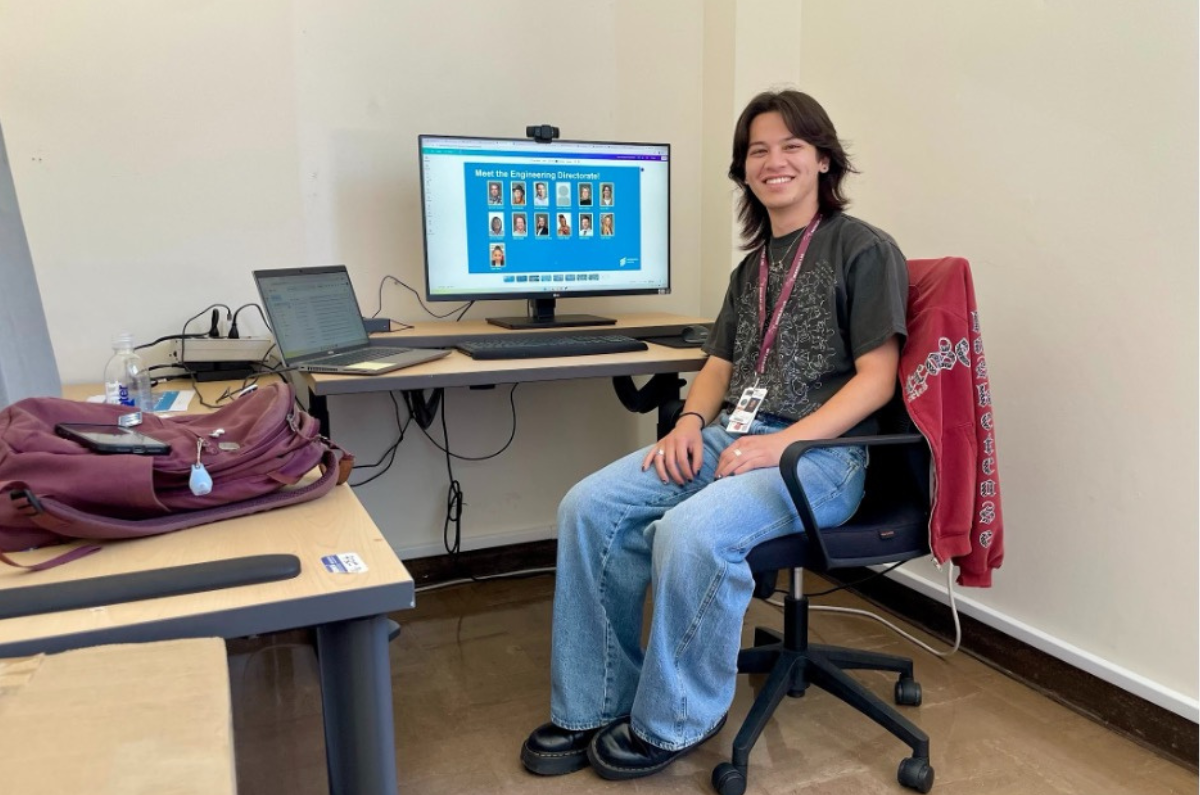
Kevin Khoa Wolf, Engineering Division Student Assistant, Engineering Division
Wolf is a fifth year student studying English and creative writing at the University of California, Berkeley. What excites them most about working at Berkeley Lab is experiencing the intersection of their passion for storytelling and interest in the sciences. Wolf loves being able to interact with and interview brilliant scientists, and then observe and write about their cutting-edge research.
Although involved with several different projects, Wolf’s main responsibility is writing articles. Apart from this article, he helped author the Engineering Division’s retirees article, and is working on a Made in Berkeley Lab article about a large plate for the Advanced Light Source Upgrade that is being made on the Engineering Division’s new Computer Numerical Control machine. He also edits and proofreads outgoing articles or newsletter blurbs, and creates social media posts for the Division’s LinkedIn, Instagram, and Facebook pages.
Throughout Wolf’s future time at the Lab they look forward to meeting new and passionate people who they can learn from, and whose interests are different from their own. Wolf also hopes to write an article that dives into the melding between Engineering and physics.
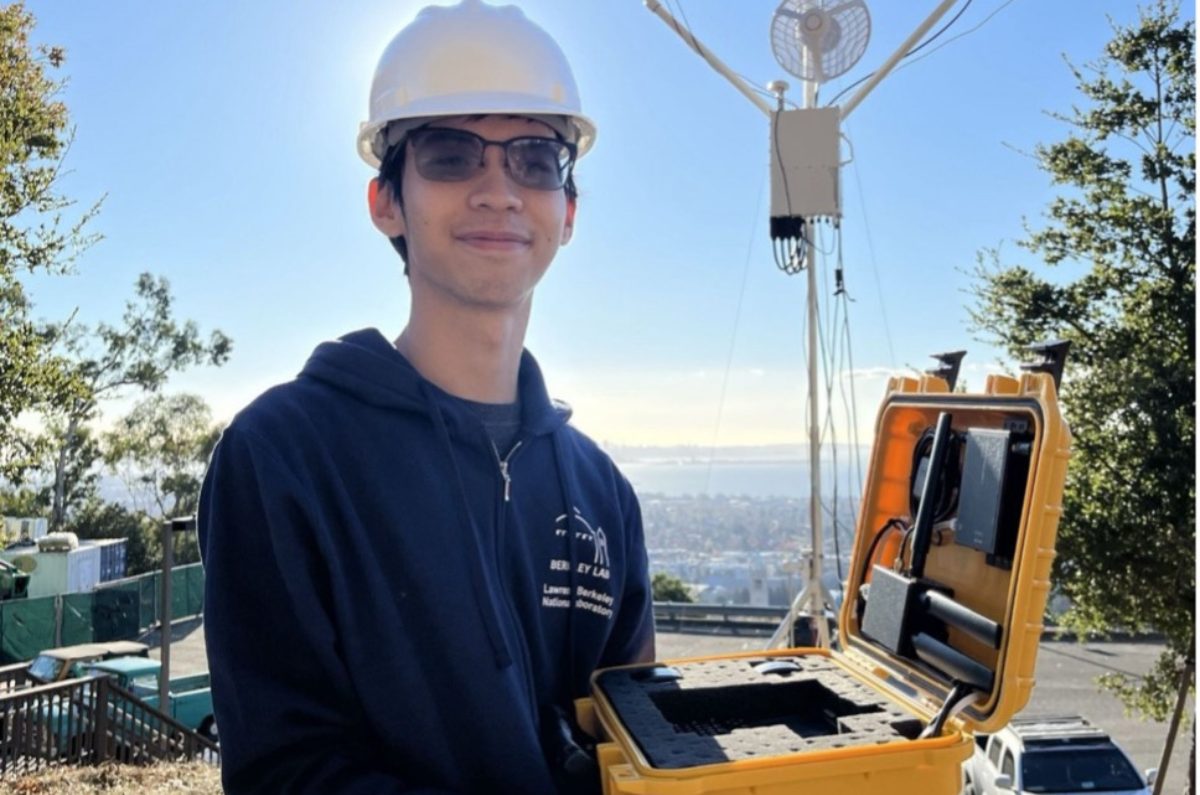
Howard Yao, Engineering Division Student Assistant, Engineering Division
Yao is a senior at UC Berkeley studying Electrical Engineering & Computer Science (EECS).
“What excites me most about EECS is the opportunity to work across both hardware and software,” Yao says. “I enjoy understanding how systems work from the physical layer all the way up to the applications.”
One of Yao’s current projects involves helping develop a barcode-based tracking system for engineering hardware and equipment.
“The project integrates labeling, data management, and automation tools to improve inventory management and device traceability for electronics that are being prepared for manufacturing and deployment, and boards used in accelerator control systems,” explains Yao.
During his future time in the Engineering Division, Yao looks forward to continuously learning from talented engineers and researchers throughout the Lab.
“Working alongside experienced engineers has allowed me to learn more than just technical skills, but also how to approach and solve complex problems,” says Yao. “The ability to think critically, break down challenges, and develop practical solutions extends far beyond research itself.”
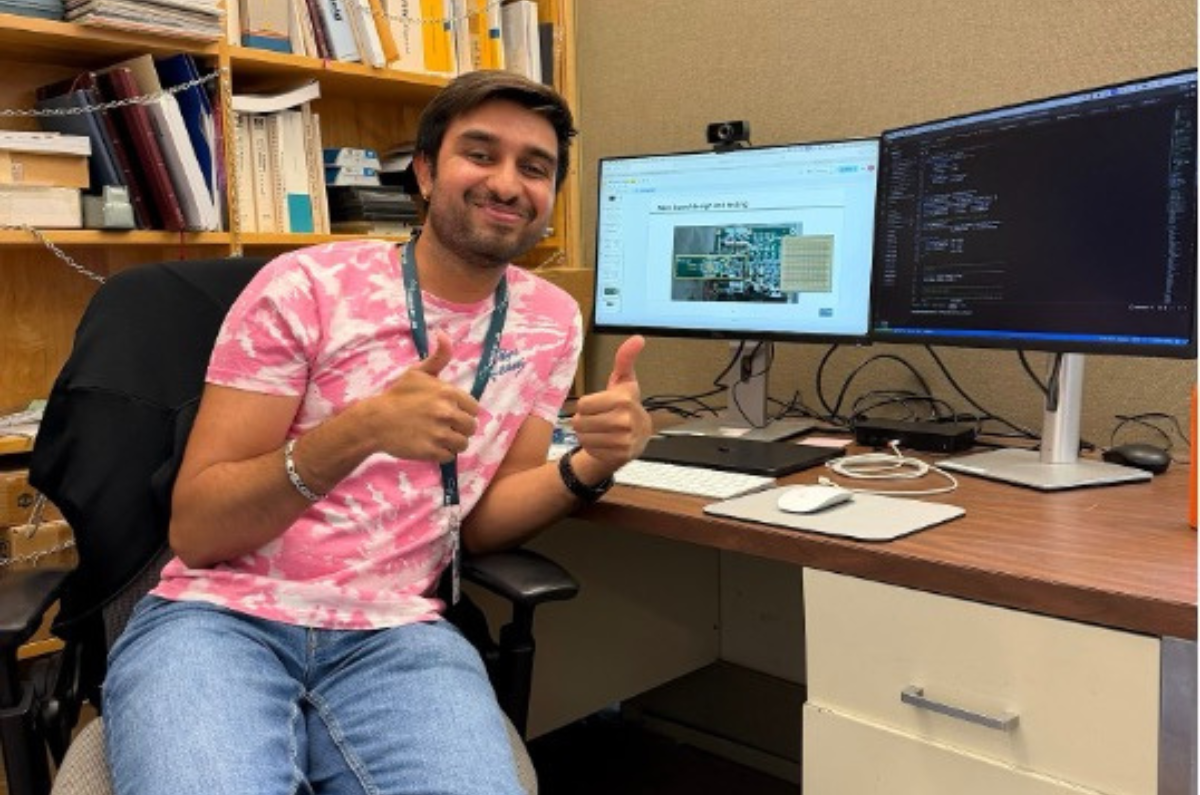
Yashas Chilkunda Seetharamu Bharadwaj, Engineering Division Student Assistant, Engineering Division
Bharadwaj is a master’s student studying computer engineering with a specialization in digital integrated circuit (IC) design, and is an IC design intern at Berkeley Lab. Bharadwaj originally studied electronics and communications engineering, however shifted his focus to IC design because he believes that is where the future of technology and the future of engineering lies.
Bharadwaj was originally a digital design intern writing the front-end register-transfer logic (RTL) code for an embedded field programmable gate array (eFPGA) platform that the Engineering Division’s IC team was designing. Bharadwaj then switched to designing Intellectual Property (IP) blocks. He is currently working on the post-silicon validation of a chip for the Engineering Division.
“I was completely taken aback by the kind of projects the Lab was working on—ATLAS, particle detectors—the things that I was passionate about when I was in high school,” says Bharadwaj. “The moment I exit from this internship, I feel that I’m a changed person in terms of thinking about designs or thinking about implementing a reusable code.”
Bharadwaj hopes to continue to work on detectors and circuit designing in future projects.
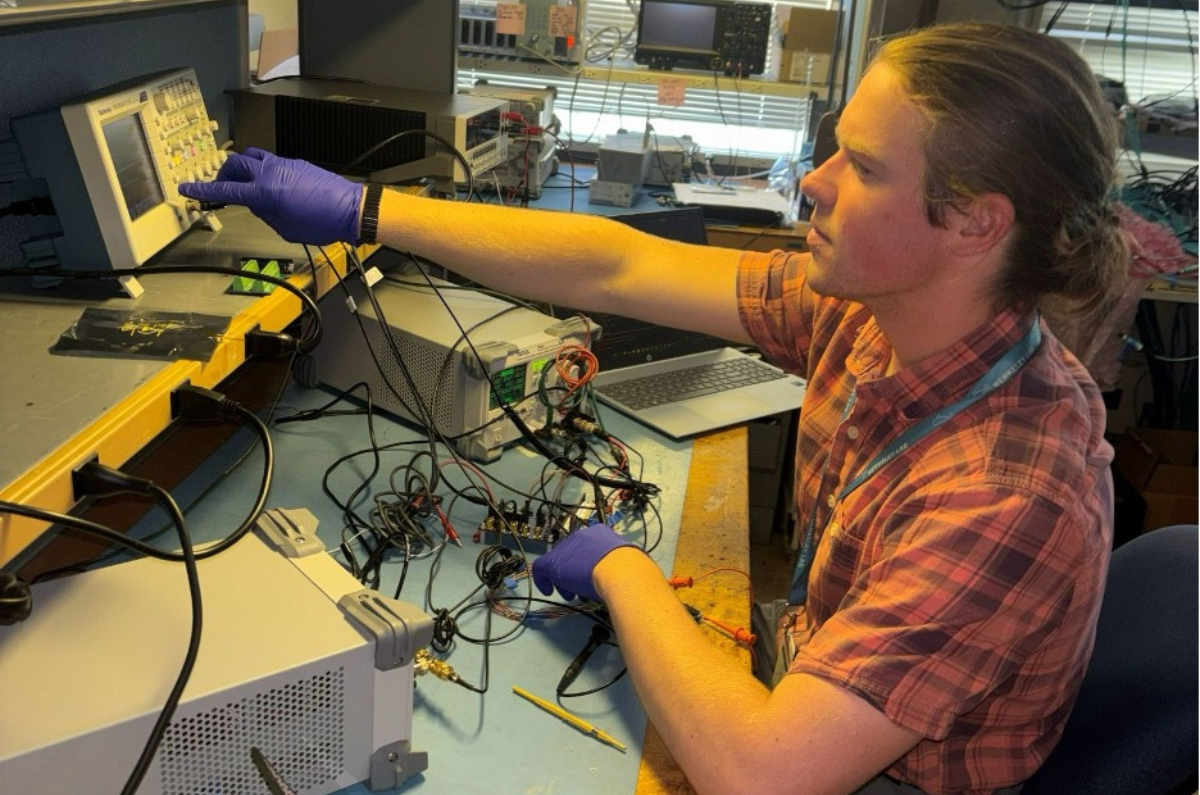
William Douglas Henry, Engineering Division Student Assistant, Engineering Division
Henry is a rising master’s student with a continued focus on electrical engineering with a specialization in chip design. What excites him about electrical engineering is its hands-on nature, but also its broadness.
“You can work from circuit boards to lasers to photonics to chips to grid systems,” Henry says. There’s so much you can do with electrical, and underpinning almost everything are the basic electrical concepts of voltage or current.”
Henry is currently working on chip design and testing for the Engineering Division. Henry’s research is simulating electrical components at super low temperatures otherwise impossible to realistically reach.
“I’m taking a chip—which is a bunch of transistors and electrical elements—and testing those at 40 millikelvin, cryo, super super cold temperatures, and from the collected data putting those really cold temperatures into a simulation model.”
Throughout his remaining time at the Lab, Henry hopes to take one of his projects fully end-to-end, beginning with fixing a broken chip all the way to stress testing it in his aforementioned low temperature simulations.
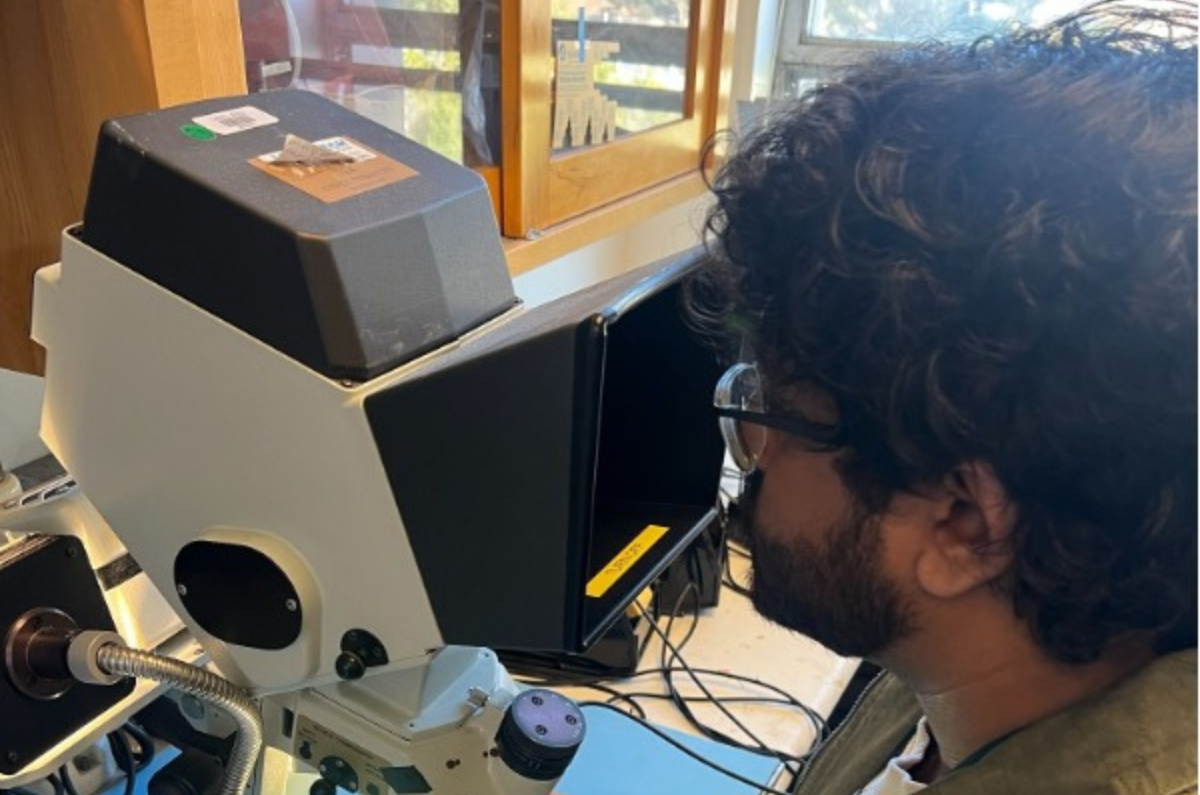
Om Aggarwal, Engineering Division Student Assistant, Engineering Division
Aggarwal is an upcoming senior studying electrical engineering at the University of California, Davis.
“What excites me about electrical engineering,” says Aggarwal, “is how applicable it is to many other scientific fields, which allows me to work and make an impact on many different things in my day-to-day life.”
Although involved in many different projects, Aggarwal works particularly on printed circuit board design, and is testing for a project characterizing an electron beam magnetic field mapping magnetometer based on micro-Cathode Ray Tube (mCRT) devices. During his time at the Lab, Aggarwal looks forward to making more connections through different engineering and scientific groups, and hopes to experience more collaboration on larger projects to make a bigger impact in his field.
Aggarwal has wanted to work at Berkeley Lab since middle school: “not only from the scientific discoveries and research, but because I had an LBNL transit stop right outside my house, and on my morning walks to school I always saw scientists and engineers heading up to the lab to work on all sorts of amazing things.”
