The Electronics, Software, and Instrumentation Engineering (ESIE) Department is a high-performing team of approximately 190 engineers, physicists, and technical professionals committed to providing unparalleled engineering competency to the worldwide accelerator and detector communities. The Department focuses on the electrical and software engineering aspects of the accelerator and detector lifecycle, from research and development to operations.
Our design and research engineers and physicists address challenging problems in team-driven science that are not addressed by industry, pushing the envelope of technology to deliver solutions that enable new scientific discoveries.
In addition to particle accelerator design and operation, ESIE provides a vertically integrated, sensor-to-software solution capability that addresses our scientific partners’ needs for detector and instrumentation systems that operate in extreme environments (e.g., high radiation, low temperature, or in-vacuum operation) where suitable commercial parts do not exist.
Data Acquisition
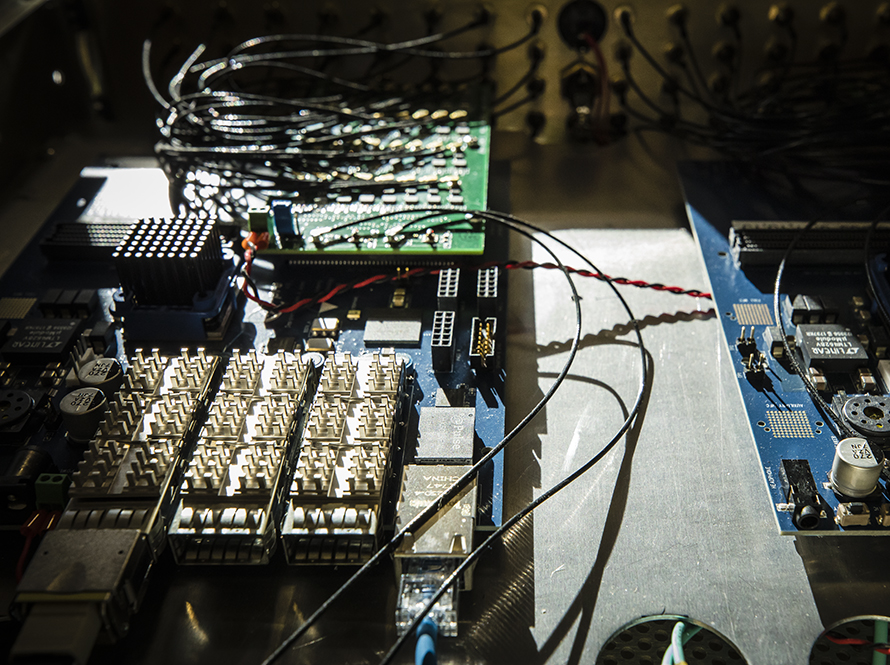
Engineers within the Division specialize in developing software tailored to meet the demands of sensors and scientific equipment. This software is tightly integrated with the low-level hardware and must meet strict timing, processing, and performance requirements. Engineers also design and build high-performance electronics that enable precise collection, digitization, and transmission of data acquired from scientific instruments. Capabilities in this area include high-speed analog-to-digital converters, front-end electronics for sensors and detectors, trigger and timing systems, radiation-tolerant chips, and custom field-programmable gate arrays.
Detectors
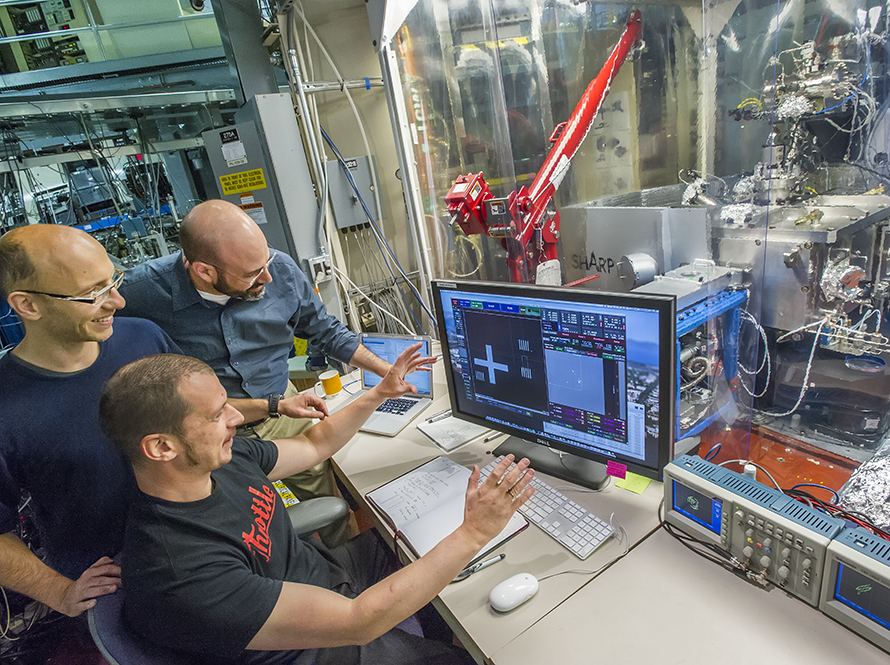
Berkeley Lab’s Engineering Division has extensive expertise in the electronics, software, and instrumentation for advanced detectors used in scientific research. We specialize in imaging detectors, with a particular focus on charge-coupled devices (CCDs). Our capabilities also extend to physics detectors. In addition to the semiconductor sensors needed to detect particles and radiation, we offer custom integrated circuit readout and electronic systems including the software needed to control the detector and move the data from the sensors to downstream data processing systems.
High- and Low-level Control Systems
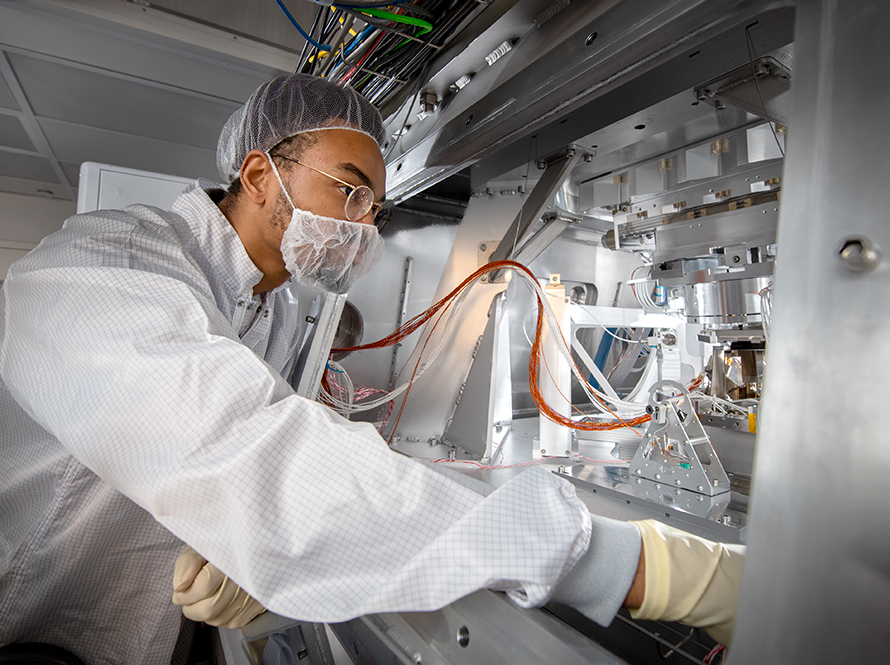
Our capabilities include using low-level radio frequency (LLRF) to control accelerator rings and beamlines, which must be precisely managed to optimize beam quality. Our engineers are also pioneers in implementing fully digital LLRF/RF controls, now used at many facilities around the world. Emerging techniques leveraging machine learning hold the promise of significantly improving beam control, reliability, and quality.
Integrated Circuit Design and Data Processing
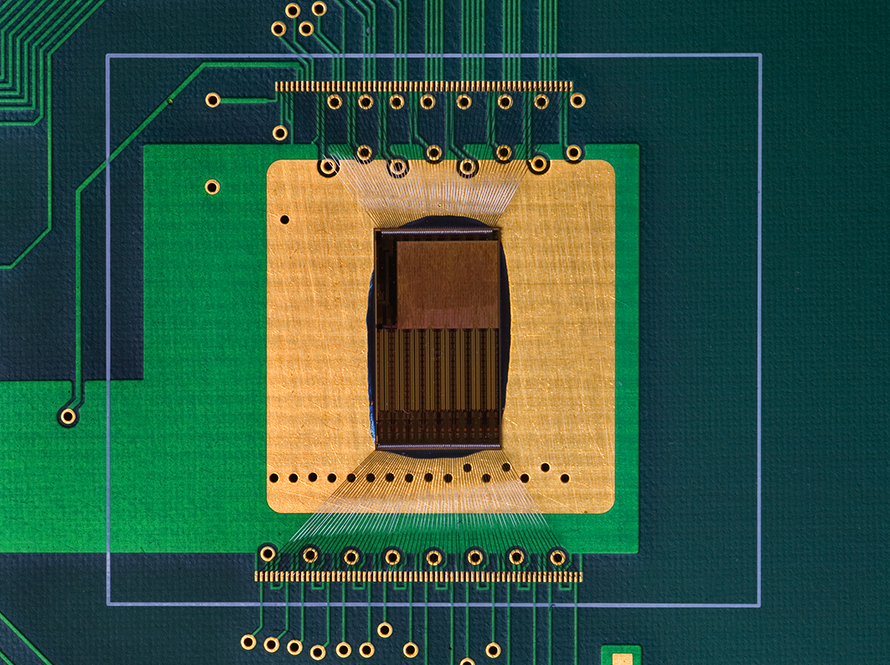
ESIE specializes in the development of high-performance mixed-signal integrated circuits, with a particular focus on integrated circuits for particle detector and scientific imager readout. We produce high-channel-count mixed-signal chips for extreme environments where suitable commercial parts do not exist. Capabilities within this area include ultra-low-noise analog front ends, high-performance data converters, CCD clock drivers, and complementary metal-oxide-semiconductor (CMOS) active-pixel sensors for scientific imaging. Complete integrated solutions, including power management, clocking, and serial digital data interfaces, are offered. Design capabilities include mixed-signal, silicon-on-insulator, and high-voltage CMOS.
Operations for Detector Systems and Accelerator Technology
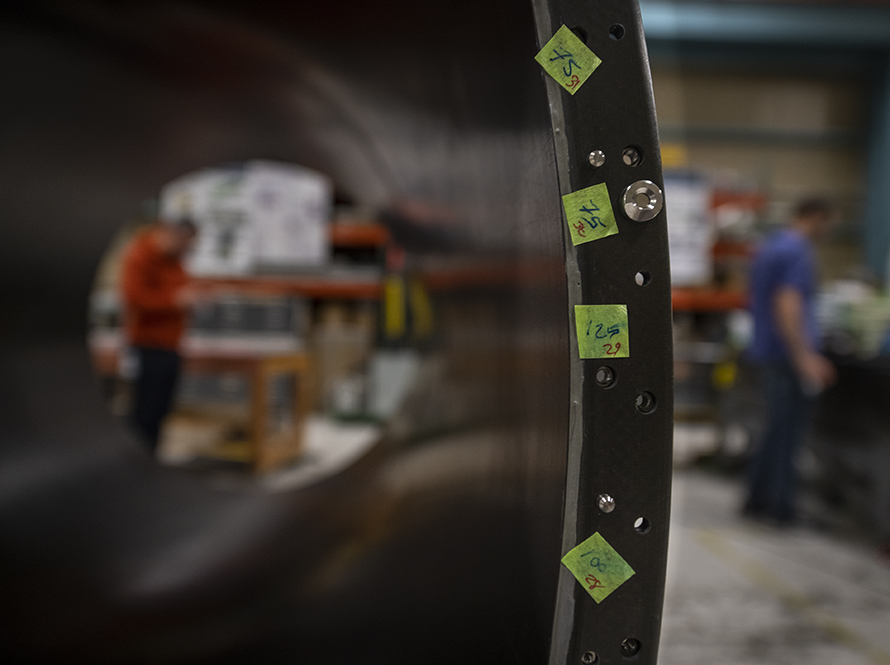
Modern particle accelerators and detectors are a complex combination of distinct systems that must work seamlessly together. A synchrotron, such as the Advanced Light Source, requires high-power RF pulses generated at precise times, high-power bending magnets and insertion devices that require superconducting magnets, complex control systems to keep the beam within required parameters, and a number of machine and personnel protection systems. ESIE operations engineers and technologists keep all these systems working in concert by performing preventive and corrective maintenance, planning and executing accelerator upgrades, and providing quick troubleshooting and repair of failed components. ESIE operations staff deliver round-the-clock support that is critical for keeping facilities running smoothly so they can deliver for our science partners.
Radio-frequency and High-voltage Engineering
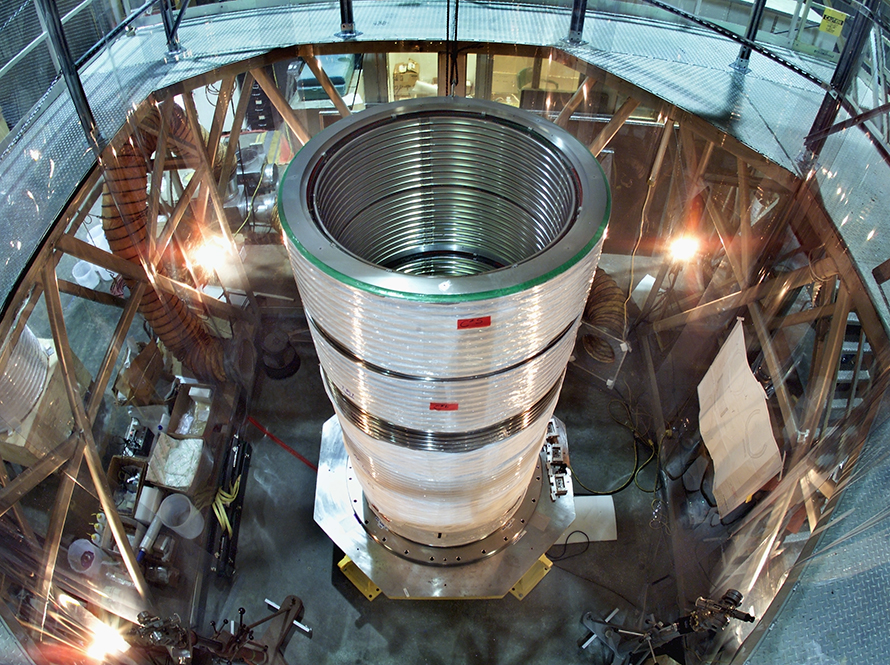
High-Power Radio-Frequency (RF) Engineering is a specialized field of electrical engineering that deals with components and systems that operate well above the audio-frequency band. At Berkeley Lab, high-power RF engineering is primarily used to detect and measure the presence and position of particles, to design mechanical structures to facilitate the transport of particles, to design accelerating structures with large electric fields used to accelerate particles, and to design and operate kilowatt to multi-mega-watt RF amplifiers used to provide power to these accelerating structures.
Reduced-complexity machine learning for resource-constrained environments
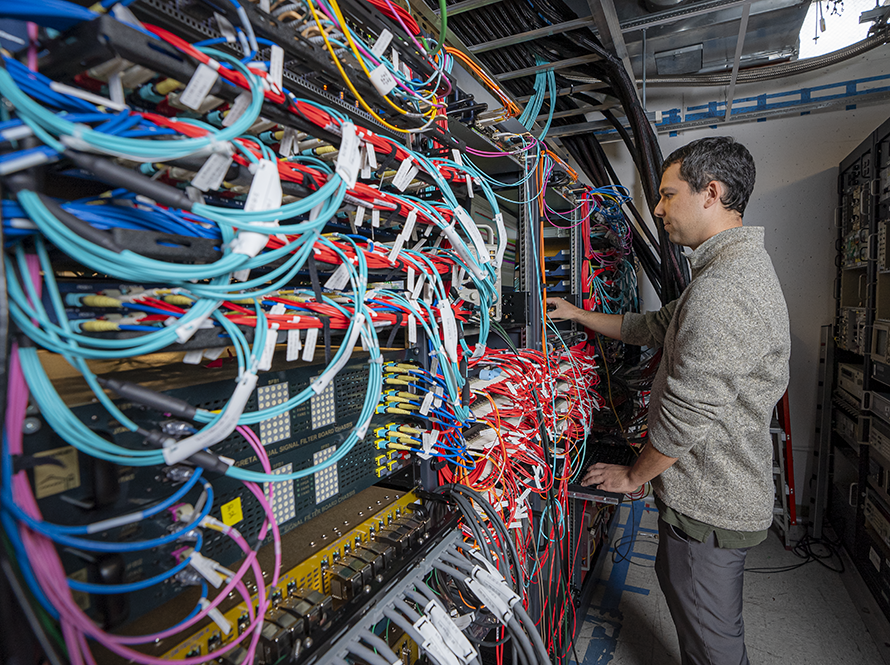
Modern particle detector systems generate vast amounts of high-dimensional data at extremely high speeds. This deluge of data is a significant barrier to the continued scaling of particle detector systems. Reduced-complexity machine learning (ML) systems integrated into the detector readout electronics offer significant advantages for lowering data rates in modern detector systems. By implementing streamlined models with fewer parameters and simplified architectures, these systems can perform rapid, on-detector data filtering and feature extraction, enabling the early rejection of irrelevant or low-value events. This reduces the burden on downstream data acquisition and storage systems, lowering bandwidth requirements while preserving essential physics information.
Safety and Interlock Systems
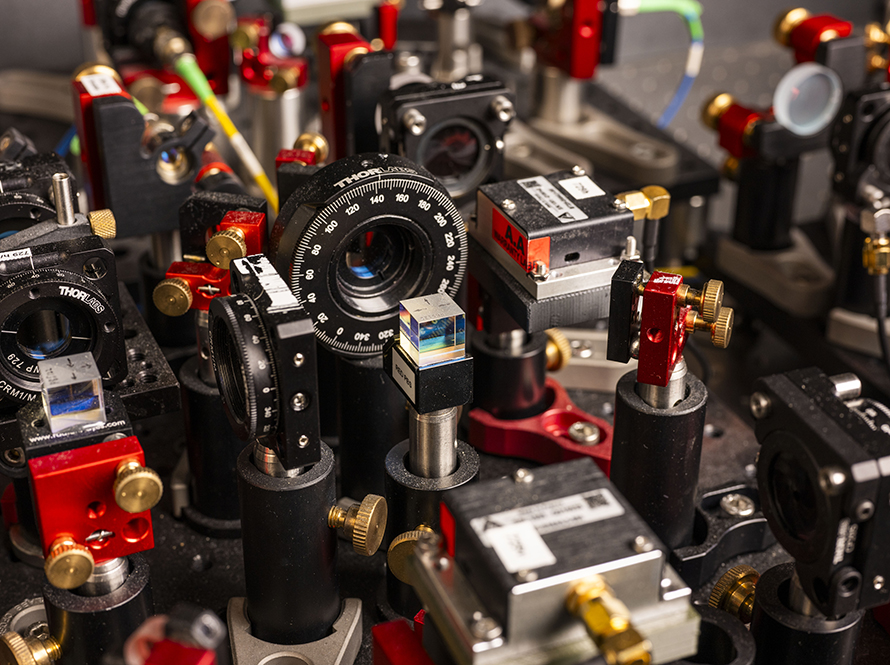
Within ESIE, the Personnel Protection Systems (PPS) team specializes in commissioning, installing, validating, and maintaining interlock systems that control access to hazardous areas. These systems ensure access only when conditions are safe. In addition to supporting large-scale accelerators like the Advanced Light Source (ALS), the PPS team provides Lab-wide expertise and oversight for radiation-generating devices (RGDs) and laser safety interlocks, ensuring compliance with EHS Procedures 731 and 732. Additionally, the Equipment Protection Systems (EPS) group works on specialized hardware and software systems to protect the ALS in the case of faults in the beamlines.
Berkeley Lab’s Engineering Division is a unique collection of engineering, technical, and scientific talent. Our workforce brings together expertise across a range of disciplines to bring cutting-edge science to life.
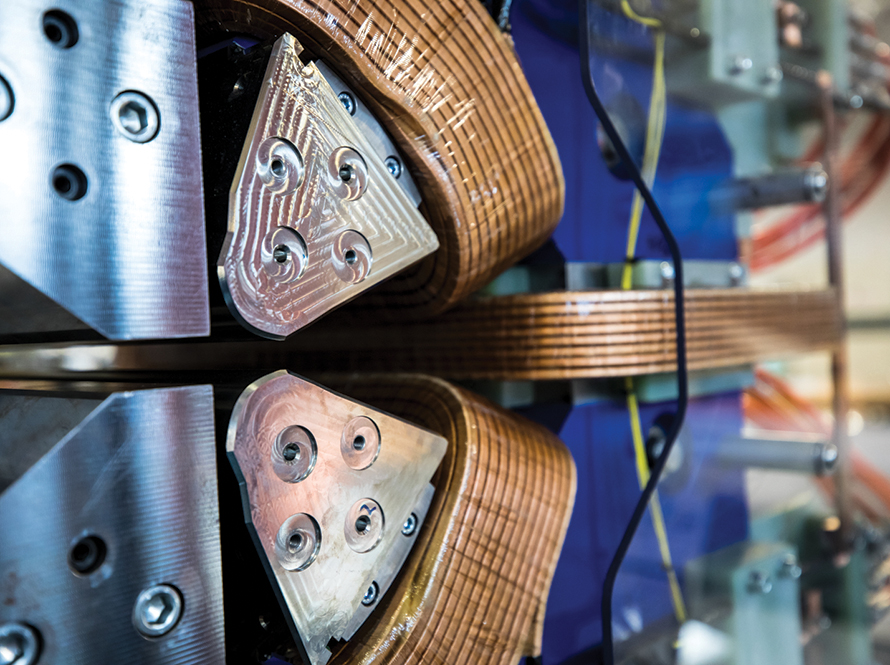
The Division collaborates with researchers to enable groundbreaking science, designing and building the detectors that enable cutting-edge physics experiments, and pushing accelerator and beamline engineering frontiers. Capabilities include accelerator engineering, detector systems and custom electronics, fabrication and manufacturing, and project execution.
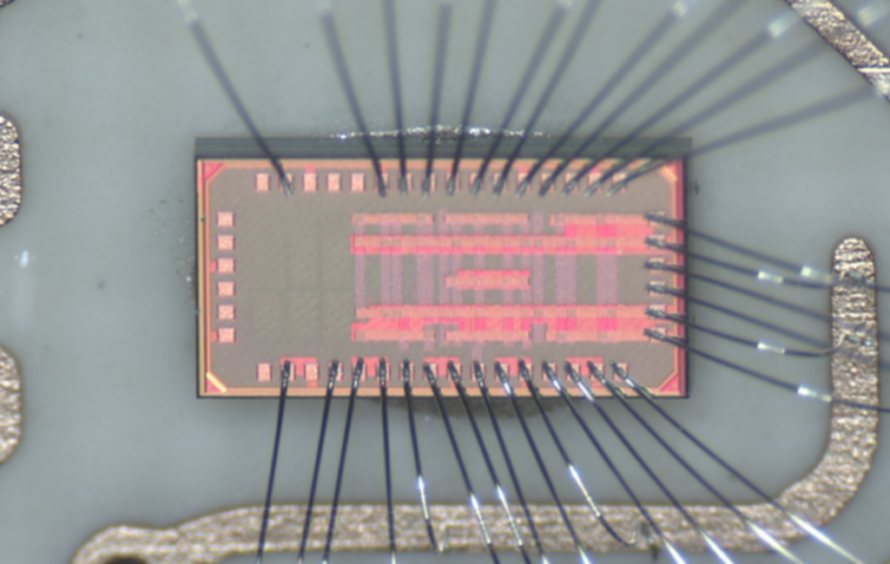
Super Cold and Super Tiny: the Electronics Behind the LEGEND-1000 Physics Detector
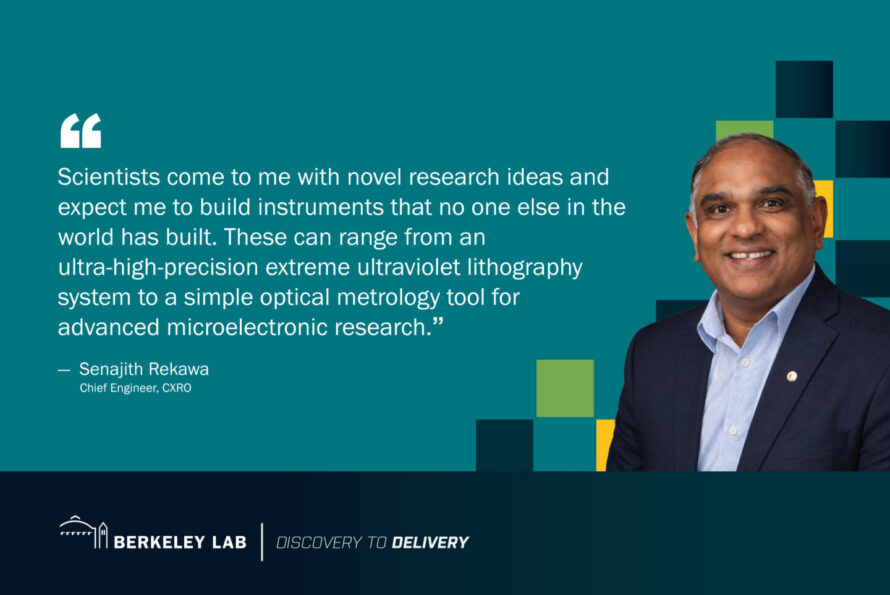
Discovery to Delivery: 3Q4 with Senajith “Seno” Rekawa
Engineering Division pilots equipment protection interlock system for Berkeley Lab user endstations