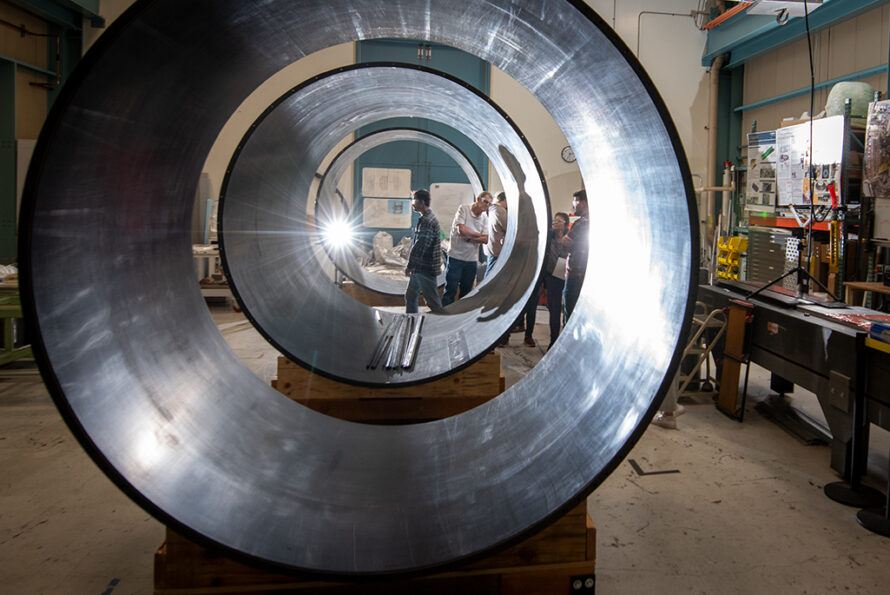
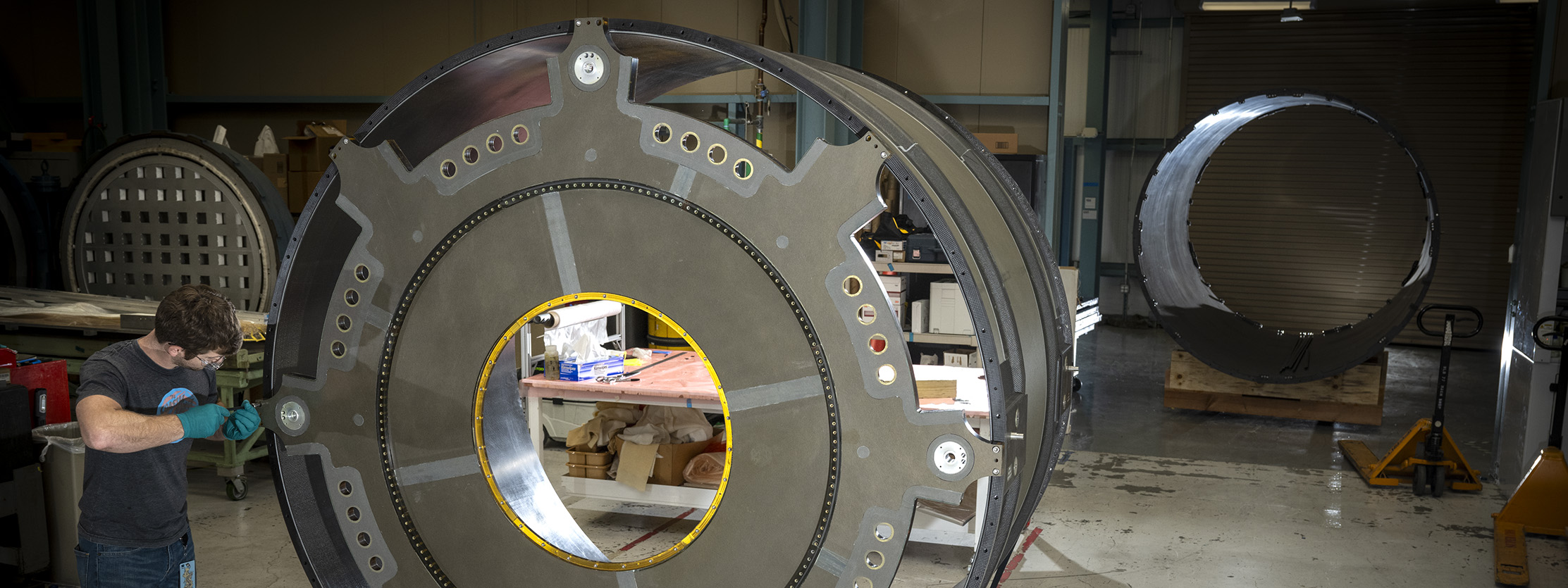
The Manufacturing Engineering Department provides a broad range of fabrication capabilities and manufacturing engineering support—on demand and with exceptional precision—to bring science to life. The department partners closely with scientific divisions to support projects and programs, to cover all aspects of manufacturing and quality engineering for planning, overseeing, and executing large-scale fabrication, procurement, assembly, and installation.
The department offers an elite on-site manufacturing facility, along with skilled machinists, engineers, and technicians. This enables engineering and manufacturing capabilities that are boundary-pushing, innovative, and optimized for the construction of groundbreaking scientific instrumentation.
Assembly and Integration
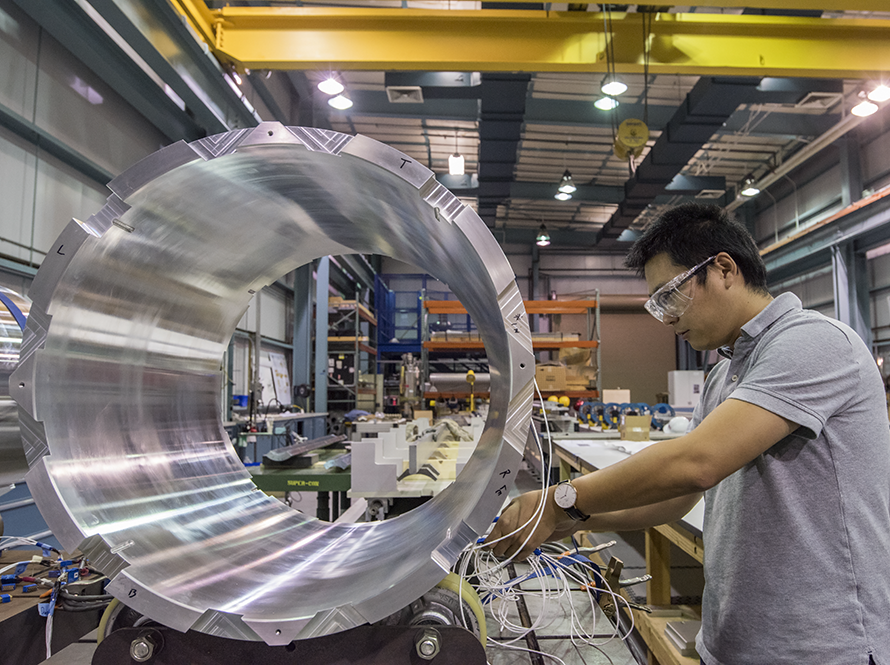
Assembly and integration of complex scientific instruments and systems is a core area of expertise for the Manufacturing Engineering Department, with deep experience working on many different projects, including particle accelerators and detectors. Capabilities include precision assembly, vacuum systems, magnets, detector systems, and cleanroom work.
Design for Manufacturability
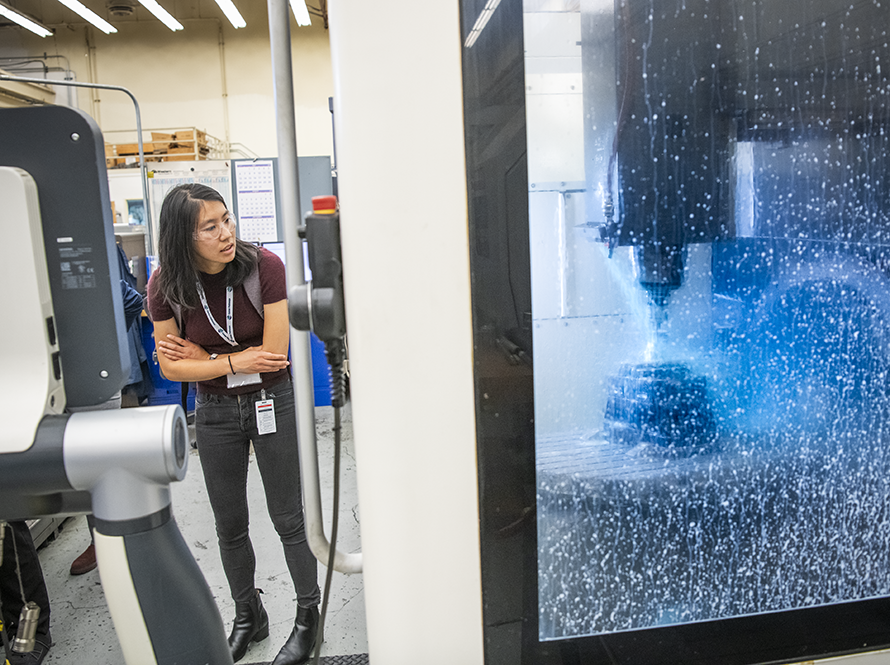
The Engineering Division supports design for manufacturability through close integration of design, fabrication, metrology, and assembly, enabling early feedback and rapid iteration on projects. Manufacturing engineers and machining experts advise mechanical engineering design staff about manufacturability and perform CAD and model quality checks, all of which help to ensure designs meet strict performance requirements and, at the same time, are able to be built as efficiently as possible.
Precision Manufacturing
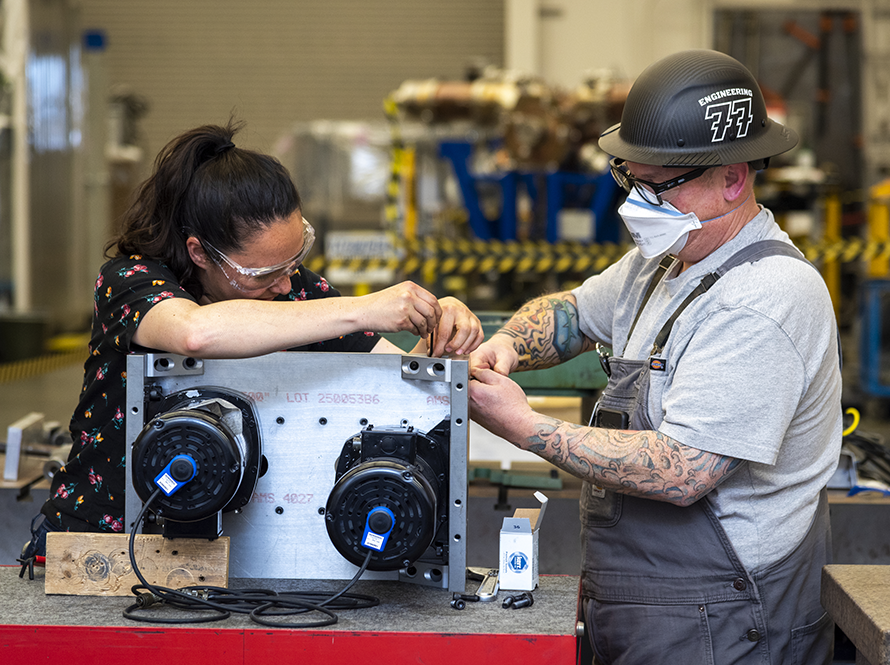
Our team specializes in designing, prototyping, and fabricating specialized equipment for scientific research. Our capabilities extend to traditional machining at large and small scales, ultra-precision machining, additive manufacturing, welding, abrasive water jet machining, electrical discharge machining, powder coating, ultra-high vacuum cleaning, and more. Engineers, machinists, and technicians at the Lab focus on collaborative production of one-of-a-kind scientific instrumentation.
Technical Procurement and Vendor Management
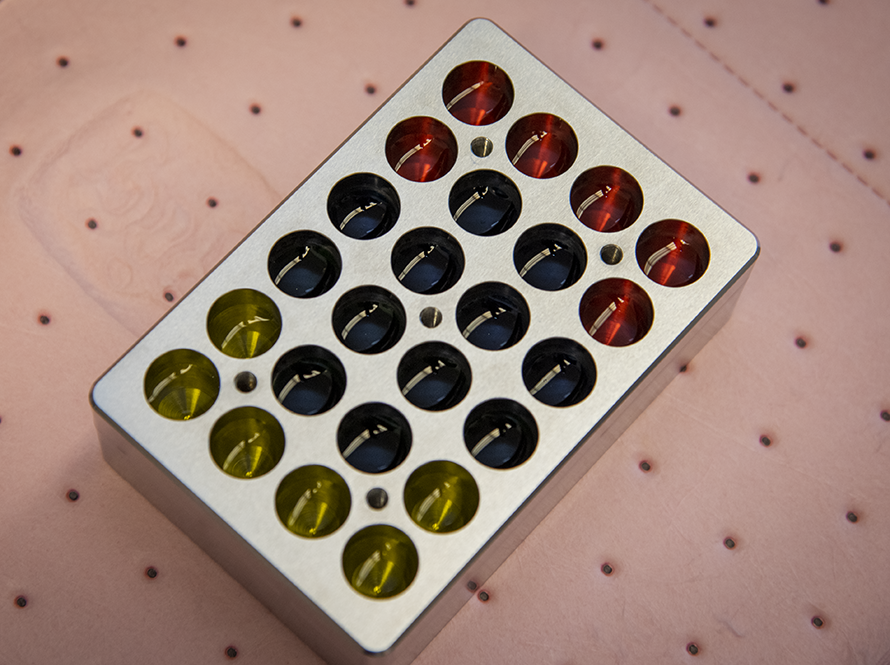
Much of the work accomplished at the Lab requires sourcing one-of-a-kind or highly specialized equipment from outside vendors. Engineering has strong technical procurement and vendor management capabilities, with specialized teams that handle the acquisition of complex scientific and custom-fabricated items. Our technical procurement experts are active through the requisition lifecycle, including preparation of technical content in requests for proposals (RFPs), vendor selection, monitoring vendor quality assurance, tracking vendor performance, regular vendor visits, and ensuring compliance with technical, safety, and regulatory requirements.
Testing and Verification
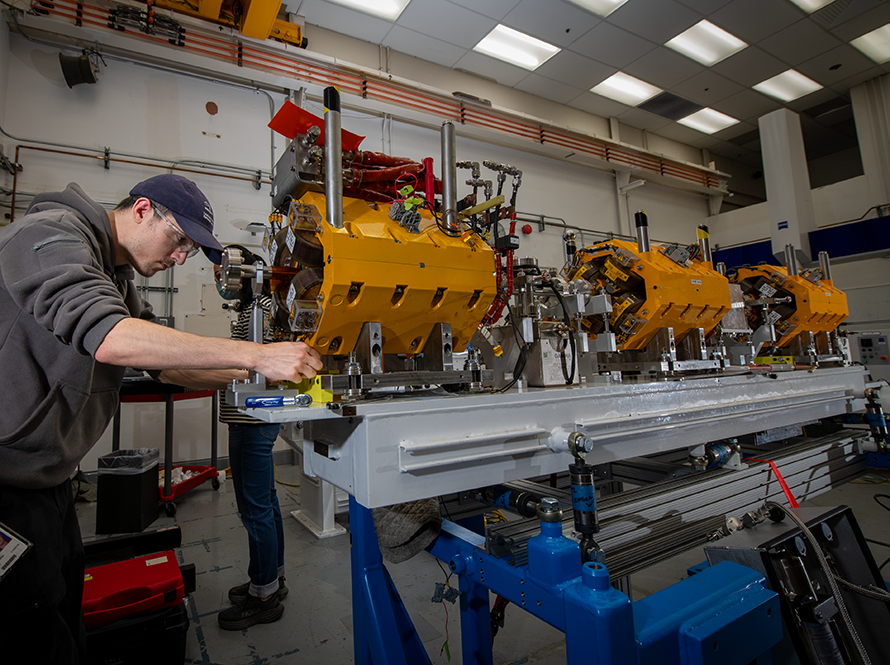
Engineering has a robust set of capabilities in precision measurement, alignment, survey, and testing. The Survey and Alignment Group is responsible for the accurate positioning of accelerator and instrumentation components using precision surveying techniques and engineering methodologies. This group utilizes state-of-the-art tools such as laser trackers, laser scanning and interferometry, digital levels, and ground-penetrating radar.
Quality Assurance (QA)
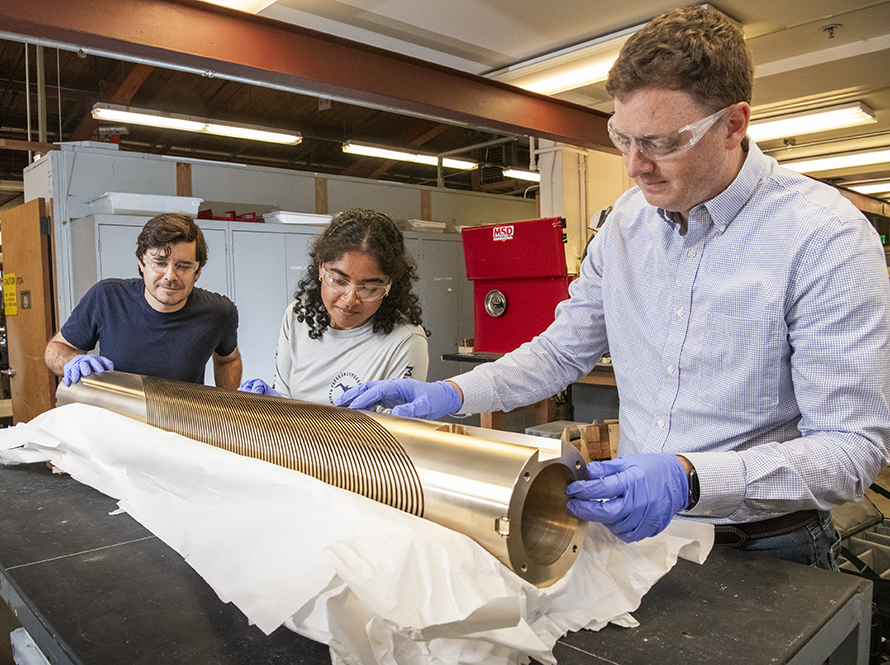
QA is integrated into engineering, procurement, and project management processes at the Lab, ensuring performance requirements and compliance with DOE standards. Capabilities include vendor oversight, inspection and testing, nonconformance tracking, and embedded QA support. Berkeley Lab has a culture of continuous improvement that is supported by regular assessments, audits, and corrective action, with formal procedures for document control, verification, and risk mitigation. The Engineering Division also has a strict process for managing nonconformances—when defined requirements, performance metrics, or standards are not met. Nonconformances are tracked through an issues management system, enforcing corrective actions, capturing lessons learned, and ensuring compliance with DOE and regulatory requirements.
Berkeley Lab’s Engineering Division is a unique collection of engineering, technical, and scientific talent. Our workforce brings together expertise across a range of disciplines to bring cutting-edge science to life.
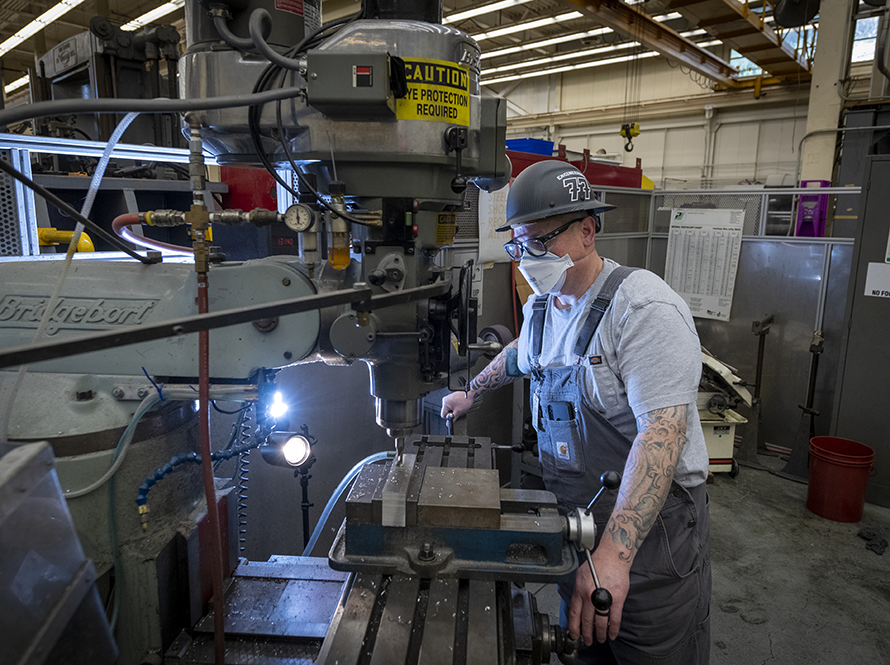
The Division collaborates with researchers to enable groundbreaking science, designing and building the detectors that enable cutting-edge physics experiments, and pushing accelerator and beamline engineering frontiers. Capabilities include accelerator engineering, detector systems and custom electronics, fabrication and manufacturing, and project execution.
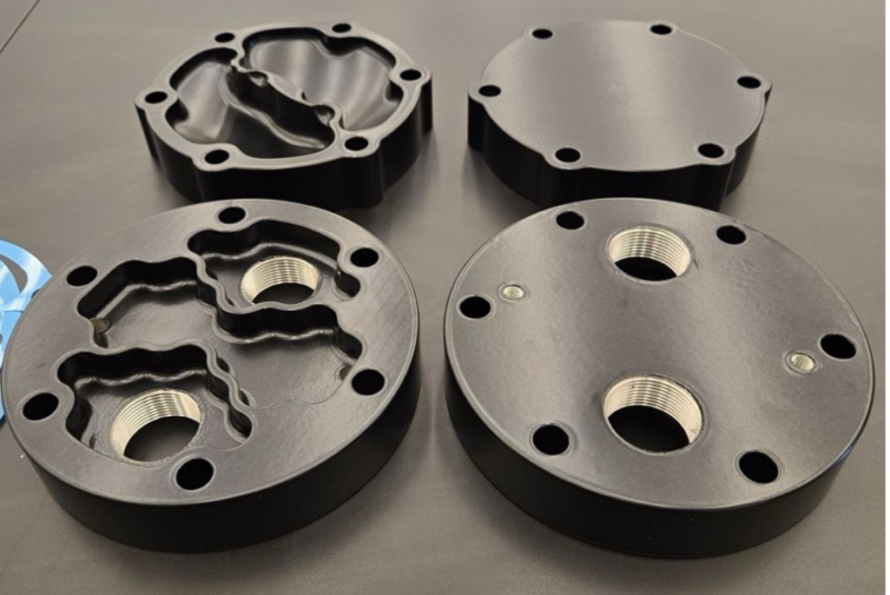
Made in Berkeley Lab: Reverse-Engineering Discontinued Parts
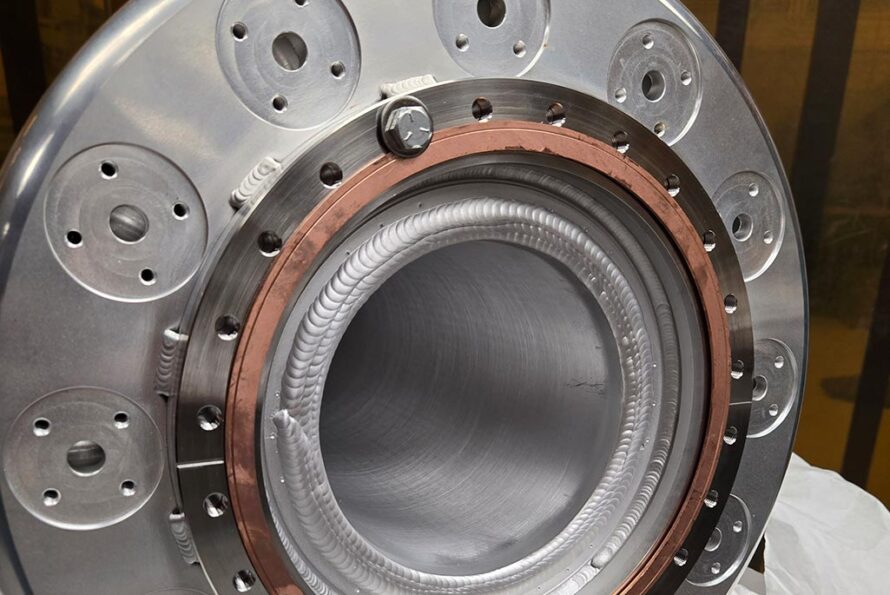
Made in Berkeley Lab: the plasma chamber at the heart of heavy ion accelerators
ATLAS’s upgraded support structure successfully integrated at CERN